
Category: Sermons
What I said this Sunday – Advent 4
Here’s my sermon for this Sunday. The gospel reading is Saint Luke’s account of the visit of Gabriel to Mary to announce the coming Saviour.

Luke 1.26-38
As we look back at history we can see how every once in a while a particular, often apparently random, event can have a major impact upon subsequent history. And it’s tempting to ask ‘what if..’ What if things had happened differently.
What would have happened, for example,
- if Alexander the Great had not died of disease at the age of 33 but had continued to expand and consolidate his empire? The world would have been a very different place and the Roman Empire may never have arisen.
- if Mozart had not died so young but had continued to write great music? Or if Beethoven hadn’t gone deaf. Just think what music we might have been able to listen to!
- if the Enigma Coding Machine hadn’t been found during the last war and shortening the war by possibly two years. Germany would have had time to develop their weapons of mass destruction and probably have won the war.
- if the Pope had granted Henry VIII the marriage annulment that he so desperately wanted so that he could marry Anne Boleyn. The Church of England would never have existed.
The possibilities that asking ‘what if?’ give us are so intriguing that there is a whole genre of fiction dealing with alternate histories – history as it might have been if something had hadn’t differently. Many of these novels, such as Philip K Dick’s great novel The Man in the High Castle, deal with the question ‘What if Germany had won the war?’
Others portray a world where the Reformation never happened. My own person favourite of these is the novel The Alteration by Kingsley Amis. It shows a world where the Protestant Reformation never took place, Martin Luther became reconciled to the Roman Catholic Church, and eventually became Pope. Because of this, in Amis’s alternative history the Papacy still holds sway in twentieth century Europe. The book tells the story of Hubert Anvil, a chorister in twentieth century England, whose voice is so wonderful that it comes to the attention of even the Pope. And because it is so wonderful the decision is made that it must be preserved at all costs – and Hubert goes on the run because he doesn’t want to be a castrati! And if you don’t know what one of those is, ask either Paul (our organist) or Jill (our choir director) after the service!
What if? Many of those historical ‘what if?’ questions are about the decisions people made. Often major events of world history have developed in a particular way because one person at one point in time made a historic decision to do this rather than that! And one of the greatest ‘what ifs?’ must surely be that presented to us in our gospel reading this morning. What if Mary, instead of saying ‘yes’ had said ‘no?’ What if, instead of having heard the angel’s message, Mary had not said ‘Here am I, the servant of the Lord: let it be with me according to your word’ but had said instead ‘You must be joking, I wasn’t born yesterday you know! Go and find someone else!’ Would there have been no Saviour? Would God have never been born into our world? Had God previously asked other young women who had said no?
Except, of course, that the problem about asking ‘what if’ questions is that you can never know for certain what might have happened – you can only conjecture. We can never know what might have happened had Mary turned the angel away with a refusal to accept what was being asked of her.
No one could have blamed Mary for saying no. She could have come up with a whole host of perfectly reasonable objections:
- I’m too young to start a family
- I’m not yet married and I might get stoned for having a baby outside of marriage
- Joseph won’t want me and I don’t want to be a single mother
What we do know for certain is that she said ‘yes’ and the rest, as they say, is history. As a result of her willingness to do what she was asked God came into our world.
And what I’d like us to think about this morning is how Mary is a model for the way that each of us responds to what God asks of us. So often we fail to make that positive affirmation that Mary made, and never get any farther than ‘what ifs’ – what if I do this, what if I don’t do that, will God really be bothered that much?
So let us look at Our Lady and see what she teaches us. Now, I call her Our Lady at this point because I’m going to suggest four things for you to remember that begin with letters spelling LADY.
L is for listen. Listening is pretty important when it comes to knowing what God might want of us. And listening involves prayer. Mary wouldn’t have known what God wanted of her had she not listened to his message, conveyed to her by the angel. If you don’t listen to God in prayer, how will you know what he is saying to you. Just as he had a will for Mary’s life so he has a will for yours. L is for listen.
A is for ask. It’s okay to ask God questions. Mary said, ‘How can this be…?’ If you’re not sure what God is doing or saying then ask him. God is only too happy for you to ask him to make himself clearer to you. Life is full of uncertainties, and sometimes those uncertainties may be about what God wants us to do. A is for ask.
D is for decide. Having heard God’s message, having asked for some clarification, Mary makes her decision. There’s no ‘Well, I’m not sure – go away and come back next week so I can have time to think about it!’ There’s no ‘Thank you very much for asking, I’m really honoured – but I think Martha who lives next door might do a better job!’ Mary’s relationship with God is such that she is able to trust him and make her decision. When it’s clear what God wants of you don’t obfuscate or prevaricate. Don’t put off to another day the decision to follow God’s will for you. D is for decide.
And Y is for yes. Having made her decision Mary’s yes to God is filled with joy. It’s not a grudging yes but a joy-filled, excited yes. She goes straight off to visit her cousin Elizabeth to give her the good news, and Luke records for us that wonderful hymn, full of Mary’s praise for God: ‘My soul glorifies the Lord …’ which we know, of course, as the Magnificat and which we sang as our gradual hymn today. May our ‘yes’ to whatever God asks of us be filled with as much joy as Mary’s was. Y is for yes.
LADY:
- Listen to God so that you know what he is asking you to do with your life
- Ask him to make things clearer if you’re not sure
- Decide whether to accept his will or not – he never enforces his will on anyone, but hopefully your decision will be, like Mary’s, what he wants
- Yes – and when you say yes may your yes be as filled with joy as Mary’s was.
And to help you remember I’ve produced a bookmark with those four points on for you to take home after the service – so don’t forget to take yours as you leave and put it in your bible.
Mary said, ‘Here am I, the servant of the Lord; let it be with me according to your word.’
Let us pray:
Lord, here we are, your servants. As each of us seeks to know your will for our lives, help us to know what that might be. And, knowing, let it be with us according to your word. Amen.
What I said this Sunday – Advent 3
This Sunday was the third Sunday of Advent, or Gaudete Sunday. Here’s what I said.
Well – it’s nearly here! Christmas – a time of parties and celebration, of eating and drinking, and generally having a good time. It’s a time that everyone enjoys, isn’t it. Go on – admit it – you can’t wait. The excitement is unbearable. So why is it that Christmas is recognised as being the most stressful time of the year? If you’ve ever done one of those questionnaires in magazines to find out how stressed you are, you’ll know what I mean. Christmas heads the list, along with family holidays, losing your job. Christmas should be a time for rejoicing and yet for so many it isn’t. Applications for divorce will rise by 40 per cent in the new year, and 80,000 people will visit Casualty departments at Christmas. So much for people having a “Happy Christmas”. Continue reading
What I said this Sunday – Advent Sunday
My sermon for this week.
Mark 13.24-end
You might just be getting the feeling that Jesus is trying to tell us something. Three weeks ago his message was ‘keep awake’ followed by two weeks of reminders of the need to keep active and busy as Christians. And here we are again, just in case we hadn’t got the message on this Advent Sunday: keep awake!
It is difficult to stay awake – to stay alert – when nothing is happening. Those who drive will know the problem of driving long distances on the motorway, especially if you are on your own. It’s easy – and dangerous – for tiredness to creep up upon you Continue reading
What I said this sunday – Christ the King
Here’s my sermon from this Sunday.
Matthew 25.31-end

In the name of the Living God; Father, Son and Holy Spirit. Amen.
Spot the connection between these five things:
- Henry the Eighth
- Arthur Pendragon
- Elvis Presley
- A giant gorilla
- Some potatoes
That was the task I gave the children at our school this week during my weekly visit to lead collective worship. They, at least, had the advantage of seeing pictures Continue reading
What I said this Sunday – Remembrance
Today, of course, was Remembrance Sunday. We held our usual service of Remembrance concluding with the two minute silence at the war memorial and the laying of wreaths. Here is my sermon.
In the name of the Father and of the Son and of the Holy Spirit. Amen.
As any general will tell you, the last thing you want is a soldier who won’t obey orders. When you’re engaged in warfare, discipline is vital. Which is why the Christmas Truce of 1914 caused the generals of both sides such a headache. During the week leading up to Christmas, groups of German soldiers on the one hand and mainly British soldiers on the other began to sing Christmas carols across the trenches. In places the trenches were only yards apart. As Christmas Day approached, soldiers of both sides started to climb out of their trenches, walking across no-man’s land. They talked with each other and exchanged gifts. Joint burial ceremonies took places, and meetings often ended with carol-singing. And on Christmas Day, most famously perhaps, games of football took place between the opposing sides – those who days earlier had been engaged in the most awful conflict.
Perhaps it was the football that was taking things too far. Continue reading
What I said this Sunday – 3rd before Advent
We are now into what is often called – though not officially – the Kingdom Season. The colour has changed to red and the themes of the readings reflect issues such as the return of Jesus, judgement, and so on. Here’s my sermon for this week.
 Wisdom 6.12-16; 1 Thessalonians 4.13-end; Matthew 25.1-13
Like most people I’ve been a guest at a few weddings in my time. Mostly they’ve been fairly standard affairs – one bride, one bridegroom, one church, one or two bridesmaids, or perhaps a couple more, followed by a reception, including one particularly memorable one on the Bluebell Railway. I have never, though, and I’m sure neither have any of you, been to a wedding quite as strange as the one pictured in today’s gospel reading. Here we have a bride who clearly couldn’t quite make up her mind about who to have as a bridesmaid and who to disappoint, so we have ten bridesmaids. Continue reading
What I said this Sunday – All Saints
Here, hot off the press so to speak, is today’s sermon.
Revelation 7.9-end; Matthew 5.1-12
 Imagine, for a moment, what heaven is like. We’re all going there, or so we believe as Christians – and we’re going to be there a long time – so what’s it like? Do you ever wonder what it will be like to be in heaven? Perhaps you’ve never thought about it much, but it’s surprising how popular recording artists have, over the years, thought about heaven and what it’s like.
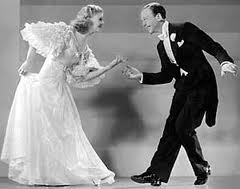
Fred Astaire, of course, sang the words of Irving Berlin:
Heaven, I’m in heaven,
and my heart beats so that I can hardly speak.
And I seem to find the happiness I seek
When we’re out together dancing cheek to cheek
He was in heaven because he was dancing cheek to cheek with Ginger Rogers Continue reading
What I said on Sunday – Last after Trinity
Here’s my sermon from last sunday.
Matthew 22.34-end

A to Z maps are very useful when you are visiting a city you haven’t been to before. As long as the street names are in a big enough font then you can find your destination. Once you know where you’re going, then you can work out the best way to get there. Of course, it is also essential that you know where you are because if you don’t know where you are starting from you still won’t know which way to go. As the old joke goes: a man was lost so asked someone for directions. The reply came: Well, if I were you and wanting to get there I wouldn’t be starting from here. Of course, in these days of satellite navigation systems, we can work out our route somewhat more exactly. SatNavs are pretty good at getting you to your destination no matter where you start from, providing you enter the destination correctly and use your common sense. Unlike the amateur sailor who had to be rescued after his boat ran aground near Continue reading
What I said last Sunday – Trinity 17
Here’s my sermon from last Sunday
Matthew 22.15-22
 What is the most boring book you’re ever read?
At this point I asked for responses from the congregation – one person from the choir suggested ‘Silas Marner’ which fitted with what I was about to say! Continue reading
What I said last Sunday – Trinity 16
Apologies for this being late – I completely forgot to post it at the beginning of the week. Never mind, better late than never!
Matthew 22.1-14
Jesus said: The kingdom of heaven may be compared to a king who gave a wedding banquet for his son.
A little girl was attending a wedding for the first time. Seeing the bride process in on the arm of her father she whispered to her mother, “Mummy, why is the bride dressed in white?” Her mother replied, “Because white is the colour of happiness, and today is the happiest day of her life.” Her daughter thought about this for a moment, and then said, “So why is the groom wearing black!”
 View from the Valley