
Category: Sermons
Always expect the unexpected!

Last Sunday the gospel reading was the feeding of the five thousand, followed by Jesus walking on the water. The feeding of the five thousand is one of the few miracles to appear in all four gospels. We had the version from John.
Ephesians 3.14-end; John 6.1-21
To expect the unexpected shows a thoroughly modern intellect, said Oscar Wilde.
Which might explain why the disciples, living as they did two thousand years ago, spectacularly failed to expect the unexpected even though the unexpected is what kept happening.
On the website Yahoo! Answers, a site where you can ask questions on any subject in the hope that someone else has the answer, someone posed the question “Do you always expect the unexpected?” To which someone else replied:
“Technically it’s impossible….I mean you can’t expect the unexpected… as the word unexpected means you didn’t expect it… so if you expect the unexpected, it’s no longer unexpected is it? Because it becomes expected… so anybody that says they do expect the unexpected are lying as it’s impossible…”
Which clears that up! As far as that person is concerned you can’t expect the unexpected. They’d have got on well with the disciples. Because you might have thought that the disciples, having seen what Jesus has been doing, would have learned to expect not just the unexpected, but the downright impossible! Already by this point in Jesus’ ministry, according to the writer of John’s Gospel, they have seen him turn water into wine, they have seen him heal an official’s dying son from a distance, they have seen him heal an invalid at the pool of Bethesda. By now they should have been ready to expect just about anything.
And yet it seems that although they had seen what Jesus could do they still couldn’t get their minds around the reality that the impossible was possible when Jesus was involved! That the unexpected kept happening. Constantly they found their faith in Jesus being out to the test – deliberately put to the test – by Jesus.
And in our gospel reading this morning we see two impossible situations where the disciples – and in a very real sense, we too – have their faith put to the test. We see Jesus’ disciples face two impossible situations; will they respond in faith? Will they trust that Jesus has everything under control, even though it may not seem so?
Jesus is followed by a massive crowd to a remote place, and we are told that Jesus tests Philip by asking him where they can buy bread for all these people. He knows what he is going to do, but he wants to find out how Philip will respond to the situation. Note that there is no indication that these people are actually hungry – but Jesus has decided to feed them anyway. Philip responds to the test in a very human way: he considers the finances and concludes that it is totally impossible as they would need a huge amount of money to feed everyone, more than half a year’s salary. Quite where he thought they could by food from is a mystery – they were in a remote place! Then Andrew chips in, mentioning that he has found a boy with five barley loaves (the cheapest, least palatable bread) and two fishes (probably pickled fish of some kind,) but states this small amount of food would be little help in feeding the crowd.
Both disciples look only at their own resources to deal with the problem and, as such, believe it to be irresolvable. Jesus shows them that what is impossible for them is possible for God and proceeds to feed the entire crowd so amply that there are twelve baskets of food left over: more than there was to start with!
Afterwards, Jesus goes off by himself to get away from the crowd. Being well acquainted with the temperamental nature of the Sea of Galilee, the disciples realise that they can wait no longer if they are to cross before a brewing storm breaks. And they set off across the sea leaving Jesus behind! Why? We don’t know. What were they thinking? Anyway, three or four miles in, after hours of hard rowing, exhausted, with conditions deteriorating and still only halfway across the lake, they are clearly in trouble.
Again, they are in a truly hopeless situation: all alone and believing Jesus to be too far away to help. Indeed, when Jesus does approach them upon the water they fail to recognise him and are petrified. They may have recently witnessed him miraculously feed more than five thousand people, but they still seem to struggle to believe that he could be there to help in their desperate situation. Once Jesus has reassured them it is him, however, and he is on board, another miracle occurs: the boat immediately finds itself ashore!
Well, what are we to make of these two miracles – feeding thousands with five loaves and two fish, walking on water in the middle of a storm and then bringing the boat and its occupants immediately to their destination?
Well, both these miracles are really about the same thing. Have the disciples learned to expect the unexpected where Jesis is concerned? Have they come to realise who Jesus is and what he can do? Have they come to believe that Jesus is the Son of God and that he can do anything? And – more to the point – the writer of the gospel is really asking the same questions of those for whom he wrote, and of us here today.
For the point of the feeding of the five thousand is not that five thousand people are fed. It is that Jesus is testing his disciples to see whether they have now realised that the unexpected, the impossible, can happen. “What are we going to do to feed these people?” he asks.
And the point of Jesus rescuing the disciples in the storm is that the disciples have not learnt to trust in Jesus in time of need. And when he comes walking across the sea to them in the middle of a storm, they fail to recognise him. And he has to say to them, “It is I; do not be afraid.”
Jesus tests the disciples. Have they learned that with Jesus they can expect not just the unexpected, but they can expect what those without faith would think impossible? In today’s gospel reading they are not yet there and they didn’t get there until after the resurrection. The writer of the gospel, though, is putting the same test to those for whom he is writing his gospel. Those who will read his words – or more likely hear them read – and who live in the light of the resurrection. Do you have the faith to believe that Jesus can work miracles, that Jesus can use his power to overcome the natural order of things, that Jesus can do the unexpected in your life?
We face the same test. In our gospel reading Jesus dealt with a crowd needing food and a boat of disciples at sea in a storm by – in both cases – doing that which seemed impossible. Do we, as his followers today, pass the test? Do we believe that Jesus can deal with the seemingly impossible problems that beset us – in our world, in our nation, in our own daily lives?
Jesus didn’t respond in ways that the disciples expected – and that can often present a problem for us. Of course, it is far from easy to keep exercising faith in situations such as when we lose our job, or are diagnosed with a terminal illness, or our marriage breaks up, or a loved one dies, and so on. For Jesus doesn’t always respond in the way that we might, at one level, want. He doesn’t wave a magic wand and make everything go back to how it was. He often responds in unexpected ways.
As with the disciples, he is there, ready to support in the ways that he thinks best, and help us find a way through. And faith is about understanding that Jesus, even when things seem impossible, can do the unexpected and help us through, and it’s about trusting him to do it. Faith – as I said a couple of weeks ago – Forsaking All I Trust Him.
It was in difficult and seemingly unsolvable situations times that Jesus took the opportunity to try and inspire faith from his disciples, because those times should have forced them to look outside themselves and seek God’s help through Jesus. It was clearly important to Jesus that his disciples had a growing faith and if the disciples needed to develop their faith, so must we.
So may we encourage our faith to grow, putting it into practice each day by choosing to believe that Jesus can and will help us, no matter how difficult our situations. Br trusting in him, trusting that Jesus can use his power among us: for what is impossible for us, is possible for Jesus!
I’m going to finish with the words of Saint Paul which end our extract from his letter to the Ephesians, a prayer that reminds us that God can do so much more than we often think he can! It’s a prayer that we used it regularly during worship at the Church Army College when I was there, and it has become one of those prayers that I know by heart and use at opportune moments. This is the version from the Common Worship prayer book.
Now to him who is able to do immeasurably more than all we can ask or conceive, by the power which is at work among us, to him be glory in the Church and in Christ Jesus throughout all ages. Amen. (Eph.3.20-21)
Which is Paul’s way of saying: Always except the unexpected! Continue reading
What clothes are you wearing? My sermon for Trinity 6

Today’s gospel reading is Mark’s account of the beheading of John the Baptist, famous for his dress sense and strange diet. As I was preparing this sermon I got a distinct message to use Johnny Cash’s song Man in Black. Although I’ve long been a fan of Cash’s music I wasn’t really familiar with the words of this particular song, so I had to look them up. You can see him singing the song here.
Here’s what I said.
Well, you wonder why I always dress in black,
why you never see bright colours on my back.
And why does my appearance seem to have a sombre tone?
Well, there’s a reason for the things that I have on.
Not the words of a priest, but the words of the great country and western singer, Johnny Cash.
Johnny Cash was well-known for always dressing in black. And people often wondered why. And in 1971 he wrote a song called “Man in Black” to explain:
I wear the black for the poor and beaten down,
living in the hopeless, hungry side of town,
I wear it for the prisoner who has long paid for his crime,
but is there because he’s a victim of the times. Continue reading
Trinity Sunday – What sort of a Christian are you?
 Isaiah 6.1-8; Romans 8.12-17; John 3.1-7
What sort of a Christian are you?
I don’t mean are you a good Christian – you know in church every Sunday, helping others every day or a half hearted Christian – here occasionally and every so often you possibly give God a passing thought and think maybe you should put a £1 in the Christian Aid envelope. No I don’t want you to delve around into your conscience and assess how well you put your faith into action; no, I ask the question in terms of what is your faith actually like – what do you believe, how do visualise or encounter God? How did you become a Christian – if indeed you are at the point yet where that is how you would describe yourself? Continue reading
Pentecost Sunday – The promised Holy Spirit

Acts 2.1-21; John 15.26-27; 16.4b-15
Anyone who uses computers knows the feeling.
You press the on button and wait – and nothing happens. Or it starts up but never finishes – it just switches on and never quite finishes loading everything. And you start to get that awful sinking feeling deep down inside. Everything is on the computer – all your email, thousands of family photos, the book you’ve been writing, twenty years’ worth of sermons! And you start to say to yourself:
- I knew I should have paid for another year of that anti-virus software
- Why on earth didn’t I install the firewall
- I know I said that backing everything up could wait until tomorrow – what on earth was I thinking
The computer is dead. And everything on it is gone. And because you didn’t look after it properly there’s no recovery, or if you’re lucky and can afford it an expert might – just might – be able to dismantle it and get your stuff off the hard disk. But there’s that lingering feeling – if only I’d done what I knew I should, everything would all be safe. If only … Continue reading
In the world but not of the world

Mother Anne-Marie was preaching this week on Acts 1.15-17, 21-end and John 17.6-19.
A week last Thursday we had a general election and through the night a surprise result emerged. A result none of the polls, until the exit poll at 10 p.m., had come near to predicting. The next day leaders toppled as those parties who had had disastrous, or just not too good results, expected their leaders to fall on their swords and take full responsibility for the failure. We are now into a period of uncertainty in most of the opposition parties as Labour, Lib Dems and UKIP struggle to rebuild and find new leadership. And we have a government with an overall majority they didn’t expect, so there is perhaps more change ahead than was anticipated. We are in a time of uncertainty and change. Continue reading
Following the shepherd – Easter 4

This Sunday is often know as Good Shepherd Sunday, since every year we have a gospel reading about Jesus, the Good Shepherd. In our service we reflected on what it really means to be his sheep.
Space: the final frontier. These are the voyages of the starship Enterprise. Its five-year mission: to explore strange new worlds, to seek out new life and new civilizations, to boldly go where no man has gone before.
It’s no great secret that I am a great Star Trek Fan. And the crew of the Enterprise regularly found new worlds and civilizations, and then need to find out more about them before making first contact.
What if we were on the receiving end of that? What if intelligent beings from another planet were to discover earth? I’m sure one of the first things they would want to do is find out something about us. And one way of doing that might be to have a look at what programmes we watch on television – what are the things that we are interested in and want to watch on TV. Well, as they study our television schedules they might be forgiven for concluding that we are obsessed with two things. Continue reading
In the upper room – Easter 3

A little late, for which my apologies. I was away last week with the Church Army Mission Community, of which I am a member, for our residential Gathering, and have only just found time to sit down at the PC to post the sermon for Easter 3.
A lady was being shown around a very old and gloomy stately home. And in one particularly gloomy part of the house she turned to the guide and said, “Tell me, are there any ghosts here?”
The guide assured her, “Madam, in all the years I’ve worked here I’ve never seen a single ghost!”
“And how long have you worked here,” she asked him. Continue reading
Easter Day – Alleluia! Christ is risen!

Easter day at St John’s began with our dawn service at 5.45am. We started with the kindling of the Easter fire and the lighting of the Paschal candle we processed in the darkness into the church where everyone lit their Easter candles. After I sang the Exsultet (the ancient hymn praising God for the light of Christ, represented by the Paschal Candle) we listened to the drama of our salvation unfolding through readings from the Old and New Testament before renewing our baptismal promises and celebrating the first mass of Easter.
This year we had the gospel reading from Mark and his account of the women going to the tomb. Unlike the resurrection accounts in the other gospels it ends on a rather odd note. Continue reading
Palm Sunday – Which procession?
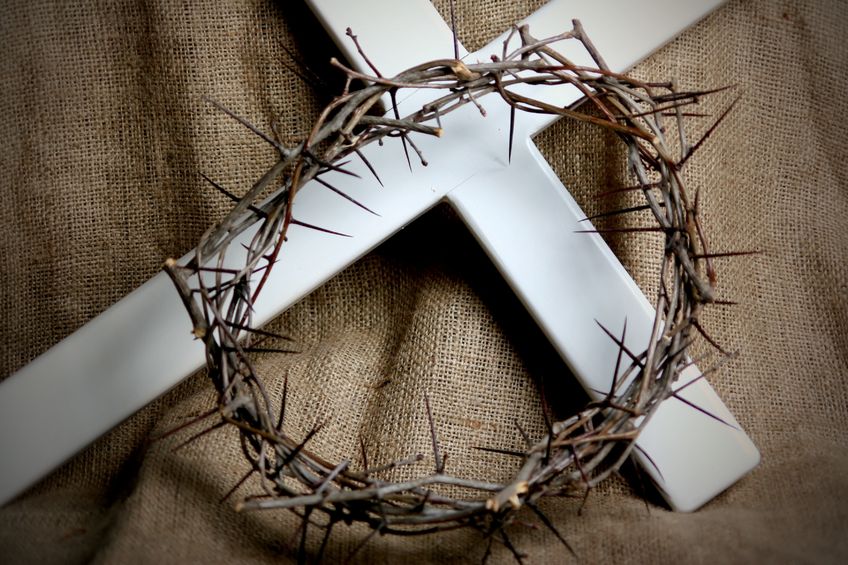
Here’s my sermon for Palm Sunday. On Palm Sunday we have two gospel readings. We begin with what is called the Palm Gospel, the account of Jesus entering Jerusalem for the feast of Passover. The second gospel is called the Passion Gospel, the long account of Jesus arrest, trial and crucifixion. I preached on the first, and picked up on the idea of the two processions entering Jerusalem that day which is discussed in detail in the excellent book ‘The Last Week’ by Marcus Borg and John Dominic Crossan.
What to do on a bank holiday Monday? What will the weather be like? Will it be sunny? Or will it be traditional British bank holiday weather? Will we be able to go out and have a really enjoyable day, or be consigned to staying in and watching TV? Continue reading
The Conversion of Saint Paul

Last Sunday we kept the feast of the Conversion of Saint Paul. Here is the sermon from Mother Anne-Marie.
Acts 9.1-22; Galatians 1.11-16
My very first car was a second hand Morris 1100 – solid, reliable and British. I had it for two years. Then I moved to London as a newly qualified social worker and realised I could get a loan for a brand new car. The job involved a lot of driving with visits to foster homes on the Kent Coast, therapeutic communities in the south west, and children’s homes in the Welsh mountains. I wanted something a bit more “trendy” than my Morris. Other social workers at the time drove Volkswagen Beatles or bone rattling Citroens. I wanted a bit more comfort that the Citroen deux chevaux, but I knew I wanted something foreign. I went for a Renault 5 – bright yellow it was – and so began my love affair with Renaults. Continue reading
 View from the Valley