Munch and Music
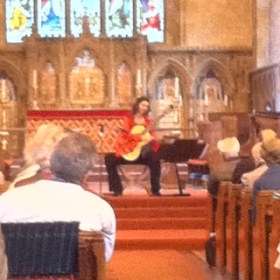
Mobile Blogging from here.

Here’s what I said on Sunday for the Feast of All Saints.
Luke 6.20-31
It was a dark and stormy night. The rain fell in torrents – except at occasional intervals.
So runs one of the most famous – if not the most famous – first line in literature. A much parodied first line that is everything that a first line is not meant to be. For who today has any idea who wrote that first line, or what work of fiction it introduced us to? In fact, it is most famously used by Snoopy – Charlie Brown’s dog in the long-running Peanuts carton strip. Snoopy – unusually for a dog – would from time to time decide to write a novel. He would sit down at his typewriter and begin – usually with the words It was a dark and stormy night.
The first line of a novel is so important. It can grab the reader’s attention – or it can put them totally off. And some first lines are so memorable that people often known them when they haven’t read, or don’t even know, the rest of the book. But a classic first line will immediately draw the reader in and give a very clear hint as the what the rest of the book will bring.
It is a truth universally acknowledged, that a single man in possession of a good fortune, must be in want of a wife: Jane Austen, of course, from Pride and Prejudice. One of the most famous first lines in English literature.
My own favourite first line, from one of my favourite books is Last night I dreamt I went to Manderley again – from Rebecca by Daphne du Maurier – which immediately conveys the sense of foreboding and mystery that pervades the rest of the book.
Some first lines of course, are a total giveaway:In a hole in the ground there lived a hobbit. The hobbit, of course, by J R R Tolkien. And how about I am an invisible man – The invisible man, by H G Wells. And as for It was a dark and stormy night… it is, in fact, from the 1830 novel Paul Clifford by Lord Lytton – who was more famous for writing The Last Days of Pompeii.
Our gospel reading this morning is important, because it contains a great and highly significant first line. More of that in a moment. In these days of film and TV, the great first line is becoming a forgotten art. It’s only in films and television shows with commentary that it still exists. As soon as, for example, you hear the words These are the voyages of the Starship Enterprise you know exactly what you’re going to get. But the usual practice in TV these days – so that you can make sense of what is to come, is to begin with those words “Previously on …” and then they let you know what has happened previously so that you don’t get lost and confused.
Well, in order to make some sense of today’s gospel reading, we need to do just that – have a quick recap on what has happened before. So … Previously in Luke’s Gospel. It’s still very early on in Jesus’ ministry. And we hear how Jesus goes up a mountain and prays – and he prays all night. And at soon as daybreak comes he calls his disciples to him – and from those disciples, his followers, he chooses twelve whom he names apostles. And that name – apostles – it important. For it literally means ‘one who is sent out’ – Luke is reminding us that these twelve particular disciples were chosen for a special task.
Then he goes with the twelve down to what Luke calls ‘a level place’ and gathering the twelve and, Luke says, a great multitude of people, he begins to talk to them. And this brings us to today’s gospel. For by understanding what has gone before, we now know that the words that Jesus speaks are the first words that Luke reports Jesus as saying after he chooses his apostles. The opening scene, as it were, of this week’s episode – the very first line of the script – Jesus stands up and says: Blessed are you who are poor …
This, for Luke, is setting the agenda for the rest of gospel. He is telling us what Jesus is about.
Blessed are you who are poor, for yours is the kingdom of God.
Blessed are you who hunger now, for you will be filled.
Blessed are you who weep now, for you shall laugh.
And so begins the section in Luke know as the Sermon on the Plain, with Jesus giving the Beatitudes. It corresponds with the Sermon on the Mount in Matthew’s gospel, which of course also begins with the Beatitudes. With one highly important difference. We are so familiar with Matthew’s version:
Blessed are the poor in spirit, for theirs is the kingdom of heaven.
Blessed are those who mourn …
Blessed are those who hunger and thirst after righteousness.
And we miss what Luke is saying. For Matthew’s version – the one we all think about when we talk about the Beatitudes, is spiritual. Luke’s isn’t. In Luke Jesus is dealing with economic and social conditions. And he is so blunt that we deal with the harsh reality of what Jesus is saying by spiritualising it and assuming he meant what he meant in Matthew. But Luke is very clear.
Blessed are you who are poor. Not blessed are you poor in spirit but blessed are you poor, blessed are you who have little or no money, nowhere to live.
Blessed are you who hunger now. Not blessed are you who hunger and thirst after righteousness, but blessed are you who are starving, who cannot get enough to eat.
Blessed are you who weep. Not blessed are you who mourn but blessed are you who live any kind of life where you are oppressed or downtrodden or uncared for.
And, Luke, unlike Matthew, goes on and shows Jesus presenting us with a challenge. For Jesus has harsh, uncomfortable, uncompromising words for those who are not economically poor or unable to feed themselves.
Woe to you who are rich – for you have received your consolation. Nothing there about those who are in the middle and reasonably comfortable – your one or the other according to Jesus.
Woe to you who are full – for you shall hunger.
And so, having chosen the twelve apostles, Jesus sets out his manifesto in his opening words in the Sermon on the Plain. And the rest of Luke’s gospel is spent showing us how Jesus has come for the materially poor and the physically starving and the oppressed.
So where does that leave us? For we cannot avoid the reality that many – though not all – of us are comparatively well off. We are certainly rich when compared to most in our world. While there may be times when we feel we are struggling to make ends meet most of us have a roof over our heads, and manage to feed and clothe ourselves. But many in our own country today go without basics that others take for granted.
To go back to our TV theme – many programmes now end with “Next time on…” and we get to see what is happening next week.
Blessed are you who are poor … woe to you who are rich
Blessed are you who hunger … woe to you who are full
Blessed are you who weep … woe to you who laugh.
What is “Next time…” for Saint John’s church? What is “Next time…” for you? How will Jesus’ words this morning make a difference to your life so that next week is different from this week? Can we learn to start getting a right perspective about the good things we have – seeing them as God-given and to be shared – not self-earned and to be held onto. Can we learn that as followers of Christ we are called to join the poor and the hungry and the weeping so that together we can share that happy ending in the eternal kingdom of God with all the saints – so that we can be ranked among the blessed?
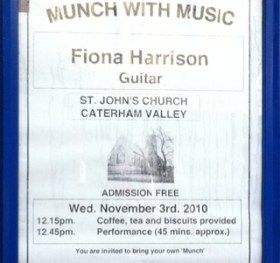
This Wednesday, 3rd November, we have our regular free concert. Free drinks provided from 12.15pm and the concert begins at 12.45pm.
This month we have the guitarist Fiona Harrison. Full details on the poster in the picture.
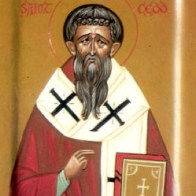 Today is the feast day of Saint Cedd. We always name our cats after saints, and people often look at us strangely when we tell them that our large ginger tom is called Cedd as they think that’s not only not a cat’s name, it’s clearly not a name at all. Well it is and today is his day!
 Last Sunday we kept the feast of Saint Luke, which is really on 18th October. We usually keep it, though, on the following Sunday and follow it with prayer for healing, accompanied by the laying on of hands and anointing.
Here’s what I said.
Isaiah 35.3-6; 2 Timothy 4.5-17; Luke 10.1-9
If there is one word that could summarize the readings for the feast of Saint Luke it is action. All these three passages have something to teach us about activity, about being busy – about our response to God, God the Creator, who himself is always active. The Old Testament reading from Isaiah urges us to: Strengthen the weak hands, and make firm the feeble knees.
That is what the Church’s social action should be doing! And such an appropriate reading for Luke, the physician. Given that Luke was a doctor, it is traditional to think particularly about the Church’s healing ministry on his feast day, and today we take those words from Isaiah to heart as we finish our service with prayers for healing.
Then there is the reading from Paul’s second letter to Timothy. Paul is older now, an old man calmly facing death – he knows he is going to be taken to Rome, he knows the result of the “arranged” trial there long before he even starts on the journey. He looks back over a ministry packed with action – and he still would like to fit in some reading, and some further writing up of his memoirs – if only Timothy will bring the books and his notebooks he left in Troas.
Above all the Gospel makes us conscious of activity in the service of God; Jesus is shown sending out thirty-five couples of disciples, telling them to prepare the way before him. Luke is the only evangelist who mentions this episode; it seems to go in with his special interest in activity. He is very strong on action, as we have seen as we have worked our way through the gospel this year in the lectionary.
It is in Luke’s gospel that we have the story of the Good Samaritan, who was certainly active – the story of Lazarus the beggar and the rich man, who was certainly not active at all, and Zaccheus, who so badly wanted to see Jesus that he was prepared to make a fool of himself and climb a tree. It is also Luke who gives us the stories of Gabriel coming from God to announce the news of a birth to Mary, and of Mary’s visit to her cousin Elizabeth, and of the birth of Jesus himself among the animals. Since Luke never knew Jesus and since only Mary could have known the circumstances surrounding the birth of Jesus it has been the tradition since the early church that Mary knew Luke and told him these things. And part two of Luke’s gospel is of course the book of the Acts of the Apostles, which tells us everything by its name – more action.
These are not just examples to follow. All three readings are deeply theological. That is, they give us the reason why we should be active. The reason is, that this is the way we respond to God, who is also active. It was best put by Saint Teresa of Avila. She wrote:
Christ has no body on earth but yours,
no hands but yours,
no feet but yours.
Yours are the eyes through
which he is to look out into the world;
yours are the feet with which
he is to go about doing good,
and yours are the hands with which
he is to bless us now.
Probably she was talking to a priest when she first said that but she might just as easily have been talking to any Christian man or woman.
But when the writer of 2 Timothy says “Do all the duties of your calling” he means more than that. He means prayer – and this is where we often slip as Christians. When we are under pressure, when time seems short or life particularly difficult, the first thing that often starts to go is prayer. We think that God will understand and forgive. So he does. But that is not an excuse. Prayer is not for God’s benefit, it is for ours. One of the best definitions of prayer that I know also comes from Saint Teresa:
Prayer is knowing, remembering, considering,
that I am always in the presence of God,
who is closer than breathing,
Closer than hands and feet.
If we are too busy to take that to heart, too busy to pray, we are letting go of the very thing that make us Christian – being in communion and communication with our creator.
It is a most remarkable thing that Luke is the most “active” and least theological of all the gospel writers. But he is the one who is most bothered about prayer. He is always showing us Jesus at prayer. And he is the one who gives us that story about Martha, who rushed around, and Mary who chose the better part and sat at the feet of Jesus and listened.
Our prayer life is absolutely crucial. Each of us needs to ask ourselves – are we praying enough – at home – or with our brothers and sisters in Church? Could we pray more? Could we spend an extra few minutes each day in prayer? For prayer must undergird everything we do for Christ. It is for our sake and the sake of the work we are doing as Christ’s body in this place.
Last week was just one of those weeks – so by the time I got around to thinking about posting my sermon it was this week! So – a week late, but here it is.
Luke 18.1-8
Pray always,” Jesus tells us. That isn’t easy, of course. We have all had the experience of praying without receiving the answer that we wanted. At some point, it is difficult to keep our enthusiasm when it seems that prayer has got us nothing.
That happened to Huckleberry Finn, the boy in Mark Twain’s books. Miss Watson told Huck to pray every day, promising that he would get what he asked for. Huck tried it, but it didn’t work. “Once I got a fish-line, but no hooks,” he said. “It warn’t any good to me without hooks. I tried for the hooks three or four times, but somehow I couldn’t make it work.” So Huck gave up on prayer. “There ain’t nothing in it,” he concluded.
We have all been tempted to come to the conclusion that “There ain’t nothing in it.” We have prayed for things far more important than fishing hooks without result.
But Jesus told the parable that we read today to encourage us “to pray always and not to lose heart.” The parable has two principle characters – a judge and a widow. The widow has suffered injustice, and has come to the judge for help. But this was not a good judge. Jesus said that he “neither feared God nor had respect for people.” He didn’t care what anyone thought – including God.
The widow came to this judge to win justice. And the fact that she was a widow tells us a lot. For widows were totally helpless. They were not allowed to inherit their husband’s estate, so they were completely dependent on other people – and if they had so son to support them, destitute. But this judge did not fear God – and he didn’t want to help this poor woman. And so she has to keep coming back and coming back, until she begins to get on his nerves. In the end her constant badgering begins to wear him down, so he says: “Though I have no fear of God and no respect for anyone, yet because this widow keeps bothering me, I will grant her justice, so that she may not wear me out by continually coming.” And that is the end of the parable. Then Jesus comments: “And will not God grant justice to his chosen ones who cry to him day and night?”
Jesus contrasts the bad judge with a good God. He says that, if this bad judge will help this widow, we can be sure that our loving God will help us. That does not mean that God will give us everything that we ask. Can you imagine the chaos that would result if God gave everyone unlimited power? If God were like a genie responding to every wish, it would be a disaster! Imagine the chaos at home if parents just allowed their children to do everything they wanted! A loving parent cannot behave like that, and neither can a loving God. But Jesus promises that God will grant justice to those who cry to him day and night. That was a special promise for persecuted Christians in Luke’s day, but it is a promise to us too. God will hear us when we pray. God will help us when we pray.
But answers to prayer often come slowly – or in a form that we might not recognize. And it is difficult to keep praying when we don’t see quick results. And like Huckleberry Finn we are tempted to give up on prayer.
Martin Luther knew that. He once wrote about prayer using his god as an illustration. He spoke of seeing his dog at the dinner table, waiting expectantly for some morsel from his master. The dog would sit at attention, every fibre of his body focused on his master, hoping for a bit of food. If you have a dog, you will know the way they look at you. During dinner, you have the dog’s rapt, unwavering attention. Luther said, “Oh, if I could only pray the way this dog watches the meat!” To pray with our whole attention focussed on God. It isn’t easy to do that when it seems that our prayers are not answered quickly or how we want.
Perhaps we need to think a little differently about prayer. Take Jesus as an example. Jesus knew only too well that prayer is not always answered in the way that you ask. Think about the Garden of Gethsemane. Jesus prayed that the cup of death might pass him by. That prayer wasn’t answered in the way that he asked – he had to drink that cup of death – but something else did happen. Through prayer, Jesus was strengthened, prepared for what lay ahead. His prayer was answered after all.
Perhaps we wish that prayer were like a genie in a bottle – awaiting our summons to do our will. Perhaps we think life would be so much easier if God always gave us what we wanted. But any parent knows that you cannot always give what your children want – sometimes you have to refuse, or talk things through, or give something else instead. But you do want your children to ask, to have a conversation with you.
Our prayers are precious to God, because we are precious to God. He invites us to come back again, and again, and again, because he loves to hear from us. He loves to communicate with us. He loves to have us near. He loves us. And while he might not always give us everything we want – anymore than we give our children everything they want – he promises to bless us when we call on him day and night. Make prayer a regular part of your life. Spend time with God. Then wait to see how he will bless you.
 As well as leading Collective Worship on a regular basis at our church school, I also get to do a lot of other things with the children. Next week, for example, Year 2 are coming to the church to learn about baptism. Tomorrow I am going in to see Year 1 and to answer their questions about what I actually do. Agreeing to answer questions without knowing what they are beforehand is, as any politician will tell you, fraught with difficulties. It’s much the same when answering the questions of children. A few years ago I was asked to go into the school and answer questions from Years 1 and 2 about Easter. Most of the questions were fine, right up to the point when one child asked, “Where does the Easter Bunny come from?” One possible future flashed into my mind – if I pointed out that the Easter Bunny didn’t actually exist, then I could find myself suffering a similar fate as the priest who told the children at an assembly that Father Christmas wasn’t real. He found the news spread across the national press, branded as the wicked vicar who spoilt the childhood of all these children by telling them their presents actually came from their parents. I took the coward’s way out and said, “Actually, the Easter Bunny isn’t anything to do with the Church, so I don’t know the answer, but I’m sure your teacher will be able to answer the question for you after I’ve gone.” Hopefully all the questions tomorrow will be easier to answer.
Here’s what I said – more or less – last Sunday. It was a particularly busy week last week, so as well as using the usual commentaries, I also used the excellent resource from Redemptorist, Living Word.
When I was young it simply wasn’t the done thing to tell your parents exactly what you wanted for Christmas or birthday presents. These days everyone makes sure beforehand that you know exactly what presents they want, which to my mind rather takes the fun out of giving. When I was young you simply had to wait to find out what you were getting – which of course just increased the temptation to go looking beforehand while your parents weren’t around to see what they had bought. My father took to hiding all the Christmas presents in the loft, which was inaccessible without a step-ladder, so there was no way a small child could investigate – rather sneaky on his part, I thought.
Of course, an important lesson that parents try to teach their children is to say “thank you” when they receive gifts. We like to be thanked and we may feel disappointed or hurt when our gifts are unacknowledged. When a gift is received with gratitude a significant exchange is completed and the relationship between the giver and the one who has received is strengthened. And in the days when presents were actually a surprise, sometimes a thank you had to be said for something that you actually really didn’t want, but that a well-meaning relative had bought you.
When thanks are not expressed, there is a sense of incompleteness. Did the gift mean anything? More importantly, does the giver mean anything to the person who received the gift? The story in today’s Gospel echoes our experience of giving and being thanked – or sometimes giving and not being thanked.
Jesus is travelling in border country along a frontier between Galilee – Jewish territory – and Samaria, a place of strangers, people of alien beliefs and customs. As he approaches a village, ten lepers come as close as they can, crying out to him to have mercy on them. Jesus tells them to go and show themselves to the priests. They do so and on their way to the priests their healing becomes apparent. They are made whole and can belong to their families and their village again. So the healed lepers hurry to the priests.
But one of them knows that something else must happen first: before he can truly enjoy what he has received he must thank the giver. So he returns, praising God, and prostrates himself in gratitude before Jesus. And Jesus asks: “Were not ten made clean? But the other nine, where are they?” Although God doesn’t give just to those who are likely to respond gratefully, God’s gifts do come in order to create and deepen relationship. So gratitude, which is a sign of someone responding to God and not just enjoying what God gives, does matter to Jesus; there is a sense of disappointment or sadness as he asks about the other nine. Didn’t they get the point?
But this story isn’t just about the importance of gratitude. Its punchline is that the leper who returned to give thanks wasn’t a Jew (as the others presumably were) but a Samaritan. As elsewhere in the Gospels – think of the Canaanite woman, the Roman centurion, the good Samaritan – it is the despised foreigner, the religious outsider, who becomes a model to challenge the disciples. It is only the Samaritan who completes the exchange of salvation celebrated with thanksgiving. It is he who embodies true humanity before God, humanity healed and grateful. This is worth pondering: are we open to what God might teach us through those beyond our own community, those we might easily regard with fear and suspicion?
George Herbert was an Anglican priest and poet who lived in the first part of the 17th century. Among other things he wrote the hymn “King of glory, king of peace” with its line “Seven whole days, not one in seven, I will praise thee,” reflecting his desire that everyone should be in church every day of the week to say the daily offices, and not just attend church on Sundays. He would have been shocked to learn that these days many people don’t attend every Sunday. He died in 1633 at the age of 40 and his feast day is the same day as my birthday, which will give you a clue as to when it is.
George Herbert once prayed: “Thou who hast given so much to me, give one thing more, a grateful heart.”
Words echoed in the chorus we sang before the gospel reading. We must pray for a grateful heart because ingratitude is never far away and grumbling often comes much more naturally than thankfulness. But how do we cultivate a grateful heart like that of the Samaritan leper? Perhaps the clue lies in the very fact that he is a Samaritan. A Samaritan (especially a Samaritan leper) can expect no favours from a Jew. He has absolutely nothing to offer Jesus. He cannot put Jesus in his debt; he has no hold on Jesus, not even shared race. So what the Samaritan receives from Jesus is sheer grace – and he knows it. He is a model for us because he knows his need; he knows he can do nothing; and he knows that he has received grace. So he is grateful.
Misuno Genzo, a severely disabled Japanese Christian, writes poems – communicated through the movements of his eyelids – which make the same point: he knows that he himself can do nothing for his family, or for his people or for God. But what he can do is give thanks for God’s love for all those people. “I just give thanks,” he writes.
To understand grace, and so become truly grateful, it does help to be in a situation of utter dependence. This makes it harder to have any illusions about what we have to offer God. We are not lepers and outcasts from society – and most of us are not conscious of being in severe need of difficulty – and so we may struggle fully to recognise our total dependence on God; but we can recognise that this is what we need to learn.
I can do nothing. “Thou who hast given so much to me, give one thing more, a grateful heart.”

 View from the Valley