Rescue mission!


image128619290.jpgWe may well be snowed in at the vicarage, but the curate I live with and I are now feeling suitably pleased with ourselves as we have just been out (and, yes, it’s snowing again) and mounted a rescue mission. The bird table had about 8 or 9 inches of snow on the roof and our local magpies and collared doves couldn’t land. I had to re-dig the path that I dug yesterday to bring new emergency supplies and fresh water and to clear the roof. The nuts that I completely replenished yesterday were half gone – we have never seen so many tits queuing up for food.

Mobile Blogging from here.

Snowed in!


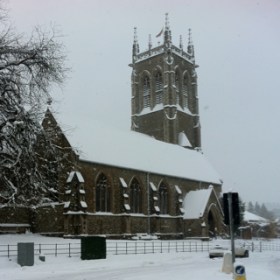
image115106462.jpgIt’s all very well having a nice new vicarage in a brand new cul-de-sac but it has its drawbacks! There’s a lot of snow out there, this part of Surrey being one of the worst affected areas in the current snowy conditions, and with only two houses occupied so far that means an awful lot of digging to get out to Crescent Road, let alone the main road.

Mobile Blogging from here.

What the curate I live with said on Sunday


Haven’t worked out yet how to set up the blog so that the curate I live with can post entries herself! I know it can be done, but for this week I’m posting her sermon from yesterday on her behalf. Apologies for the delay in case after my advertisement for the blog in church on Sunday meant you’ve been desperate to read her sermon. Here it is.

Isaiah 2.1-5; Romans 13.11-end; Matthew 24.36-44

Imagining a better future can be very powerful. As most of you know my Monday to Friday job is with Welcare, where we are often working with parents who are in distress or beset by overwhelming problems. One of the ways we work with them is to say “if a miracle happened overnight and you woke up tomorrow morning and your problems had disappeared, what would it be like?” It is important then that they describe this miracle future in great detail, so we ask “and what else” and “what else” and “what else”. From this picture that they build, we can then say “what one thing could you do tomorrow to bring you nearer that future”. There is a miracle future and a practical realism and between them they can begin to change lives.

Our reading from Isaiah this morning gives us a wonderful vision of the world’s miracle future, where God teaches us his ways and we walk in his paths. The weapons of war are beaten into agricultural implements, and the nations of the world wage war no more – a miracle future where the world’s resources are used to feed the world not create armaments, where the whole world walks in the light of the Lord.

So I might turn to you and ask – if that is the miracle future of God’s world, what one thing could you do tomorrow to make a difference, to bring that future one step nearer.

In our reading from St Paul’s letter to the Romans, it is almost as if Paul has asked that miracle question that we ask when we’re working with families – you wake up in the morning and ….St Paul says “now you know it is the time for you to wake up from sleep, for salvation is so near.” A miracle has happened, you are so near now to being saved from all the things that oppress you. Often with parents they do want to lay aside “the works of darkness” – that may be shouting at their children, quarrelling with each other, the chaos of their homes, it may be drinking heavily or drug taking. When they describe their miracle future it can be as if they have put on “the armour of light” as Paul describes it, so that they live honourably as in the day, not in drunkenness, quarrelling, jealousy and the like. In Christian terms Paul is telling us that the miracle of Christ has come and is coming. The day is near, so look at how you are living. We may not all have had to turn to someone, a therapist, a counsellor, a priest or social worker, to help us sort our problems, but it doesn’t mean we haven’t got them. We all have things we struggle with, would rather others didn’t know about us, things we would not want Jesus to know, things we hide and may not even face in prayer.

Isaiah has given us a vision this morning of what it means for nations to walk in the light of the Lord; St Paul gives us a vision of what it is like for us as individuals and families to put on the armour of light, to live in the full glare of the light of Jesus Christ. What one thing could you do tomorrow to bring you nearer to the life that you know Jesus wants you to live? What one thing could you do tomorrow to bring you nearer to the life that you know Jesus wants you to live?

And then we come to our rather complex gospel reading, where the vision is not of how God’s world could be, nor of how we might live our lives in the full light of Christ, but is a vision of how it will be when Jesus comes again – his second coming to earth, when as we say in the Creed “He will come again in glory to judge the living and the dead, and his kingdom will have no end.” I don’t want us to get too literal about what this will be like, but the vision in our gospel reading, the miracle to come is that we will all be going about our ordinary lives and suddenly it will happen. And the vision is only terrifying if you think you might be one of the  ones who will be left. It is a wonderful vision if you think you will be swept up in the glory. This is the vision of judgement and the end times.

 Now the very first Christians thought this would be very soon – in their lifetime. But it didn’t happen and it went on not happening and we still wait. That doesn’t mean it won’t happen, only that it hasn’t happened yet and as our gospel today said “About that day and hour no one knows, neither the angels of heaven, nor the Son, but only the Father.”

So with that vision, that miracle in mind of the second coming of Christ, I ask you “what one thing could you do tomorrow to make you one little bit more ready for it happening, because it could happen tomorrow. What one thing could you do to be that bit more ready?”

From very early in the church, instead of focussing always on being ready for the second coming of Christ to earth, teachers like St John Chrysostom in the fourth century, have focussed instead on being ready to meet Christ at our death, because they realised that whilst you can’t have any certainty that the second coming will be in your life time, you can be one hundred percent certain that you will die. We can’t know the hour or the day, but we do know it will happen to every single one of us – there is no avoiding our death and it could be tomorrow.

You may have heard, or just read on your notice sheet, that this last week the wonderful Dean of our Cathedral, Colin Slee, died. I was with him in a meeting on October 12th, he seemed vigorous and well, contributing to the debate about women Bishops in his forthright, passionately committed way. That was but days before he was diagnosed with pancreatic cancer and five weeks later, on Thursday of this week, he was dead. We never know the moment that a speeding car, a bomb on a bus or a fatal illness can strike. What one thing could I do tomorrow to make me more ready to die tomorrow? A vision, a hope, for the future of nations, for this world. A vision, a hope, of how we should live our lives now. A vision, a hope, of how it will be when Jesus comes again or we meet him at our death.

This is Advent. A season of hope in the church, of looking forward with hope to God’s vision of this world as it should be; and a vision of meeting his glory in the world to come. But we do this looking forward with hope by thinking of the big questions – What is the point of life? What are we here for? What will happen when we die? Advent is a season we in the church regard as penitential – a season when we think of God’s vision for his world and how we have caused it to fall short – a season when we think of how Jesus taught us to live our lives but how we always seem to fall short – a season when we think of what it will be like when Jesus comes again, that day when he will come and judge the earth and us, and we will have fallen short – a season when,  because for us and for generations of Christians who have gone before, that second coming of Christ may not happen in our lifetime, so a season when we think about how we will instead meet Christ at our death, how it will be when we see him in glory. So in this season of Advent we think about the way we will die and our readiness to meet our Lord and live in his light and glory for ever. The church dons purple in penitence, in recognition that corporately we have fallen short. There are no flowers, there will be no weddings, no singing of the gloria in this season of advent – signs that we are in different mode, in reflective mode, thinking about the big questions of life and death. While the world parties and thinks Christmas has begun, we in the church reflect on life and death, light and dark, good and evil.

So, isn’t this all a bit gloomy – I can almost hear your minds ticking over – “this is gloom and doom, I thought she said it was a time of hope and vision”. Well it is. Life, light, good, glory – these are the vision. Living life in all its fullness now and living life in all eternity in the future. But how ready are we to embrace the light, the good, the glory and life in all its fullness? In Advent we can face our inner darkness and reflect on those big questions of life and death, because we can look forward in hope to the vision of the miracle future; the light that Christ brings both to the world here and now, and to the life everlasting that awaits us all. Amen.

Munch and Music in December


We now have details of the next Munch and Music which takes place on Wednesday December 1st in the church.

The programme is presented by Woldingham School and features their Amaris Choir. Admission and coffee are free. Coffee is provided at 12.15 and the performance is 12.45-1.30pm. You are invited to bring your own ‘Munch’. The choir have performed in St. Mark’s Venice and Westminster Cathedral.

Please note : There is no ‘Munch For Music’ in January but it will continue from February- July 2011

What I’m reading at the moment


Since I’m not preaching next Sunday I have taken the opportunity to start my Advent book early. I always try to read something special during Advent just as in Lent, and this year I am reading “The Orthodox Church: An Introduction to the History, doctrine and Spiritual Culture” by Father John Anthony McGuckin. Often, of course, as you read there are passages which resonate. I’ve just read in the introduction that the Orthodox Church is:

A full-blooded community of the faithful who have their feet planted firmly in the earth, and their eyes raised joyfully to heaven.

That, surely, should be true of all Christians, and it stuck me that our worship should help us to achieve that – it should help us to raise our eyes joyfully to heaven and then, when we go in peace to love and serve the Lord it should have prepared us to live as a Christian community with  our feet planted firmly in the earth.


What I said on Sunday


Here’s what I preached last Sunday, the feast of Christ the King.

Luke 23.33-43

Have some Madeira, m’dear,
I’ve got a small cask of it here.
And once it’s been opened, you know it won’t keep.
Do finish it up. It will help you to sleep.
Have some madeira, m’dear.
It’s really an excellent year.

Many of you will recognise those words from Michael  Flanders and Donald Swann. They’re from their famous song about Madeira, of course. I begin with their song about Madeira because I once drank a glass of it, offered to me a number of years ago by a former curate of this parish that some of you will remember. It was the first glass of Madeira I’d ever had – it’s a drink that is nowhere near as popular today as it used to be. And, I have to say, it was extremely nice, and I’ve had a few more glasses since. But the reason why I mention this glass of Madeira is that, as Flanders and Swan put it, it was from “really an excellent year”. It was bottled in 1845 – a hundred and sixty five years ago. I’ve never drunk anything anywhere near as old before or since.

The people I was with who shared the bottle started to talk about the events of the year 1845 and we quickly realised how lacking our knowledge of that period was. All we could come up with was that it was somewhere between the battle of Waterloo in 1815 and the outbreak of War in Crimea in 1854. I wonder if anyone here knows of anything that happened in 1845? Well, it was the year of the Irish Potato Famine. The first University Boat Race was held over the Putney to Mortlake Course. Cricket was first played at the Kennington Oval. John Henry Newman, in the news again this year of course, converted to Roman Catholicism. The rubber band was invented – one of this country’s great contributions to the world. And Queen Victoria was on the throne.

Queen Victoria had come to the throne in 1837, so she had been on the throne just 8 years when the Madeira was bottled, and what strikes me especially was how different our attitude to royalty is now. Victoria was to become the ruler of the largest empire the world has ever known, and most of her subjects never saw her, or even saw her picture. Had they found themselves in her presence they would have been extremely careful not to put a foot wrong, and, on the whole, Queen Victoria usually got her own way. And as for the kind of publicity members of the royal family get today – well, Queen Victoria would most definitely not have been amused! And she certainly wouldn’t have approved of a future king marrying anyone other than royalty – not even a member of the aristocracy and most definitely not a commoner. Unthinkable!

In recent years, of course, our attitude to royal families has changed considerably. The British royal family, in particular, has been under scrutiny in most countries in the world as people follow their fortunes in tabloid newspapers and glossy magazines. What emerges is that there still exist very high ideals for members of a royal family, and at the same time there is a very critical attitude towards their human weaknesses.

Today we are celebrating the feast of Christ the King – a king very different from the kind of monarch that we usually think about.. Jesus was a man who was both respected and despised. At times, it was almost impossible to see any trace of majesty in him; but even so, he was a king. He is Lord of the Universe. And we, the New Testament tells us, are his brothers and sisters. It is important to realise that as brothers or sisters of the king, we are also members of the royal family. And we are members of his royal family because through our baptism we have become full members of the Lord’s family and therefore we are truly royal people – a royal priesthood the Bible says. And – like members of our own royal family – we have high ideals to live to and official duties to carry out. We are called to love and to serve each other, to work for justice and peace in our world, to relieve the needs of the poor and the suffering, and first and foremost to worship and pray.

However, we are all human. Just look at the royal families which still exist in our age. They fail, their weaknesses often emerge, at times they cannot live up to the ideals expected by those around them. Like them we are also broken and needy people. Those around us are the same. Being part of the kingdom of God means respecting also the brokenness of others. It means being with them in their weakness, even recognising their sovereignty in the midst of much confusion and pain. Think of the good thief hanging beside Jesus on the cross. There wasn’t much in the figure of Jesus, hanging on the cross, that spoke of royalty and kingship. Yet somehow, perhaps intuitively, the good thief recognised it. He honoured Jesus. He asked to be a member of his kingdom. And in return he was promised membership of the royal family of the Lord.

Christ the King is in heaven at the right hand of the Father. But you and I, the members of this royal family are here among his people. Today’s feast challenges us to live out our royal responsibilities and duties as completely as we can. It is ultimately about doing the will of our Father in heaven. For it is only in doing so that we can inherit the kingdom that has been prepared for us.

What I said on Sunday


Here’s my sermon preached at our Remembrance Service.

On Thursday 31st August, 2006, the BBC released an unexpected piece on news on its website. Peter Jackson, the director of the Lord of the Rings films and King Kong, was intending to make a new film. In fact, a remake of a film first made in 1955. Jackson says he first saw the film as a child and “really loved it”.

“There’s that wonderful mentality of the British during the war – that heads-down, persevering, keep-on-plugging-away mentality which is the spirit of Dambusters,” he said. For that, of course, is the film in question. The film is based on the true story of the raids on the dams in the Ruhr Valley in Germany in 1943, and will have a script written by Stephen Fry and has as executive producer Sir David Frost. Filming was due to begin, said Jackson, in 2007. As things stand, I gather filming hasn’t yet started – it will probably now be 2011.  By the time the film is released the length of the production process will have been as long as the war itself. Amazing, isn’t it, that it can take so long to produce a film of a historical event.

The original film, of course, has achieved almost iconic status in this country. It’s scenes of the Lancasters flying in along over the reservoirs, the pilots having to aim carefully as they lined up their bomb sights with the turrets on the dams before releasing the now famous bouncing bombs, was copied almost exactly for the final scenes of the attack on the Death Star in the original Star Wars film. Just as iconic is the famous Dambusters March, written by the composer Eric Coates, also famous for writing the theme tune to “Desert Island Discs”. Instantly recognisable, it’s even sung at England football matches. But it was over 65 years ago – so one cannot but wonder why Peter Jackson wants to make another film about the event.

Well, perhaps an answer is given to us by another piece of film – this time from the BBC. Last weekend the BBC show a programme called “The First World War from Above”. What was significant about this film was that it showed recently discovered footage of the devastation Western Front shot from the air in 1919, as well as aerial photographs taken by pilots during the war. You can see the sheer devastation that resulted from the trench warfare of the First World War. Towns and villages completely devastated. Today, of course, that devastation is gone. The countryside has recovered and former places of conflict have been built over, and except where parts of the trench system have been preserved, you probably wouldn’t notice today anything to show that such dreadful conflict and loss of life had taken place. Until you look from the air. And you can see the massive shell-holes left where the British exploded mines beneath the enemy lines. The scars of war still clearly visible. The film was shot from an airship piloted by a frenchman, Jacques Trolley de Prévaux, and he is seen in the film. At the end of the programme his daughter is shown the newly discovered film for the first time. She has never seen her father. He and his wife were shot as spies by the Germans in the Second World War shortly after she was born in 1943. The scene where she sees him, in this film shot at the end of the First World War, is quite moving. And it reminds you that the effects, the scars, of war, are still felt nearly a hundred years later.

I remember that, even though my primary school years were around 20 years after the end of the Second World War it stilled seemed so close – its shadow still hanging over the world in which I grew up.  But the First World War still affected the lives of those we knew. There were still thousands around who had fought in the Great War – I remember my grandfather proudly showing me a photograph I still have – of him in the uniform of the 1st Royal Dragoons, sitting on his horse after he joined up at the beginning of the war. And yet, other than that, he never said a word about his experiences – and he wasn’t one to keep quiet about the past. He was my grandmother’s second husband. They were married in 1919, her first husband having died in the war. She never spoke about that – I only found out when researching my family tree. There’s a part of my grandparent’s lives that is closed to me because they couldn’t talk about it – and sometimes even now I wonder about what they experienced, and how it affected them throughout their lives. Were they different people because of what they had gone through? So, though the First World War may have been over years before I was born, it is still relevant to me today. The scars of war last long after the events themselves have passed.

Which brings me back to the Dambusters. I can still remember vividly the excitement surrounding the 50th anniversary of the Royal Air Force, founded originally, of course, as the Royal Flying Corps during the Great War. My local cinema, caught up in the celebrations, showed a special double bill that we all eagerly went to see. The two films showing were “Reach for the Sky”, the story of Douglas Bader, and “The Dambusters”, Guy Gibson who led the Dambusters raid was awarded the Victoria Cross, and he wrote a book about it and his time with 617 Squadron called “Enemy Coast Ahead”, a book I read as a teenager. It was republished a few years ago but retitled: Enemy Coast Ahead – Uncensored. It seems that when Gibson first wrote the book it was heavily censored by the authorities. Gibson never survived the war – he was shot down and killed in 1944 – and his book was never published with the full story as he wrote it. Only now, we are told on the back cover, can the full story be told. Peter Jackson has said that he intends, in the new film, to tell the full story. Even when the original film was made much was still classified – even the shape of the bombs was changed for the film.

In a way, Gibson’s original story – with all the bits missing as a result of the censor’s black pen – reflected the experience of so many caught up in war. There is so much that people have experienced, lived through, suffered – and yet like my grandparents it is simply not possible to talk about or share with others. Things experienced in combat or at home, at the front or in hospital, losses of family members, friends and comrades. Experiences often too difficult to put into words. Many of those who fought in the trenches in the Great War were never able to talk about their experiences when they came home – they were just too dreadful. Everyone who is caught up in war – whether combatant or civilian – has their own story to tell, and often a story that – just to cope – has to be censored. In Gibson’s republished book, and in Peter Jackson’s remade film, the full story can be told. And yet for ordinary people caught up in war, for their families, for their descendants, the full story may never be told, or is still only unfolding as in the case of the aerial film made by Jacques Trolley de Prévaux – and the scars of war continue to affect us.

So, today we remember. Because difficult though past experiences may be, by coming together each year as a nation we can remember together. We come together to honour the memory of those who never returned and who still do not return, and share with those who mourn them. We pray for and with those who still have difficult and painful memories. And we can join together in pledging ourselves to work for a better world, a better present and a better future for everyone – a world where peace reigns and war becomes a distant memory.

We remember too that British Forces are still called upon to engage in combat – families across the country today, as well as in other countries, anxiously watch for news, worried that it is their son or daughter who won’t be coming home. And just as the full stories of those in our own lives – our parents, our grandparents, our brothers and sisters, our friends – may never be told, so we are conscious that the same is true of those involved in war and conflict today. Even when peace comes, the effects change people’s lives – and the lives of those around them – with the scars of war reaching out into the future for years to come.

This is why remembering is not just about looking back – and thinking of the present – it spurs us on to look forward too, to look forward and to ask ourselves what contribution we might make to the future. To ask ourselves what we can do to make our world a better place. To ask – in 20, 50, 100 years time how will we be remembered – will our children and their children still have to deal with the scars of war or enjoy a world of peace? To ask ourselves what we can do to help and support our armed forces and their families – no matter what our own individual beliefs about the rights or wrongs of any particular conflict.

The Christian message is that God sent his son Jesus, the Prince of Peace, to bring the good news of salvation to a world that is in so much need. We all still need to hear that message, to know the love and peace that only Jesus can give in our own lives, and to share that love and peace will all around us. So, as today we remember, as we offer prayers and thanksgivings for all those – combatants and civilians – who have given their lives in war, as we honour the memory of all who have given and still give their lives to protect our way of life, we commit ourselves anew to the service of God and humanity. And we pray that God will use us to bring the peace to our world for which so many in all kinds of ways have striven, and for which so many have sacrificed their lives.

What I said on Sunday


In the name of the Living God; Father, Son and Holy Spirit. Amen.

Job 19.23-27; Luke 20.27-38

It’s always been the same. People like to identify with groups, or factions, or gangs, or whatever you want to call them. And of course it’s much more fun if there’s another group of people that you can disagree with – violently if necessary. Wherever you look in history, they’re there, some more influential than others. Normans and Saxons at the Conquest. Roundheads and Royalists, in the Civil War. Mods and Rockers in the Sixties. English and French, for 900 of the last 1000 years. Montagues and Capulets in Shakespeare’s Romeo and Juliet, or the Sharks and the Jets in the musical version West Side Story. It was just the same in the Jewish society of Jesus’ day – only then it was Pharisees and Sadducees. We tend to refer to them together and assume that they were really much the same. Far from it. Pharisees and Sadducees were two quite distinct and often diametrically opposed parties.

Take today’s gospel reading. This is often read as an attack by the Sadducees on Jesus – trying to catch him out as the Pharisees often tried to do. But take a closer look at the reading and you begin to see that this wasn’t really the case. They are trying to get one over on the Pharisees and what they are doing is attempting to manoeuvre Jesus into their corner by getting his support. So how did they plan to do this?

One of the age-old human questions is: do we live again after we die? Job, whom we heard from in our first reading, asks that very question earlier in the book: If mortals die, will they live again? (Job 14.14) Well, one of the key differences between the Pharisees and the Sadducees was their answer to this question. The Pharisees believed that after death you were raised back to life to be with God. The Sadducees believed that there was no such thing as resurrection. And to understand what is going on we need to go back a bit into the history of Jewish understanding of life after death.

At this point belief in an actual resurrection was a fairly recent development in Jewish religious thought. The traditional belief was that when you died you lived on in your descendants. This was why, given the patriarchal nature of Jewish society, it was vital for a man to have children. Without them he wouldn’t live on. So, in order to give him the best possible chance of having children, the law stipulated that if a man died childless, his brother had a responsibility to take his widow as his own wife and father a child on behalf of his brother. It was also a way of ensuring that property stayed within the family and that the widow was cared for.

Remember, the Sadducees didn’t believe in resurrection. And to them the Law was important. So they come up with this story of a woman whose husband dies childless, so she has to marry his brother, who also dies – and so the story goes on. She marries seven brothers, all of whom die with no children. So, at the resurrection, they ask, whose wife will she be?

This is actually an attempt by the Sadducees to show how ridiculous the Pharisees belief in resurrection is – the idea, they are suggesting, that this women can have seven husbands at the resurrection shows how resurrection is just a joke. No intelligent person, they are trying to say, could possibly believe in such a ridiculous concept!

Jesus, though, is far too insightful to be drawn into the argument, and turning the tables on the Sadducees he shows them how it is they – not the Pharisees – who have got things completely wrong. There is no marriage in the resurrection, Jesus points out. Those who take part in the age of the resurrection neither marry nor are given in marriage. And then he goes on to tackle that question of Job’s: if mortals die, will they live again? It’s a question we cannot answer  from reason or experience alone, but it is a question we all want an answer to. And the answer that Jesus gives is a resounding yes. And the way that he does it is to refer the Sadducees back to their own Law, the Law that they held so highly, the Law that their whole belief system was grounded in.

And he goes back to Moses whom the Sadducees have already claimed as their own at the beginning of their question. Moses, when he encounters God in the burning bush, hears God say, “I am the God of your father, the God of Abraham, the God of Isaac, and the God of Jacob.” (Exodus 3.6) When God speaks to Moses, he makes it clear that to him Abraham and Isaac and Jacob – though dead to this world – are alive to him. So, Jesus says, resurrection is clearly a reality. As Jesus might have put it to the Sadducees: “the Scriptures that you cite as the basis of your authority say that the Lord is [present tense] the God of the patriarchs, whom we know to have died. How could God be the present-tense God of dead people, unless they are alive in the resurrection?” (Quoted from New Proclamation Year C 2010 – Fortress Press – page 273)

Jesus actually says almost nothing in the gospels about what the resurrection will be like. But he does assure us that it is real, that we have something to look forward to beyond the physical constraints of this world. The Sadducees had no hope of life after death – that’s why they were sad you see. Death, Jesus tells them and us, is not the end. Like Job, we can answer that question: if mortals die, will they live again? Like Job, we are able to say: I know that my Redeemer lives … and after my skin has been destroyed, then in my flesh I shall see God. (Job 19.25f)

The Bible teaches us that life comes from God. And Jesus shows us that for those who respond to the love of God, God has provided for life after death, a gift from him for all those who have accepted his love and entered into relationship with him. We can all look forward to that time when, beyond the uncertainty of death, we embrace the certainty of being, as Jesus puts it: children of God … children of the resurrection.