
Tagged: Peter
What I said this Sunday – Easter 3

This Sunday I decided to major on the first reading from Acts – the conversion of Saint Paul – rather than the gospel reading. Here’s what I said.
Where would we be if Jesus had decided to do background checks, or even criminal record checks, on those he wanted to be his apostles? Would he have appointed them? Or would he have decided that they weren’t suitable candidates for the job?
After the resurrection the eleven – the original twelve minus Judas Iscariot – had been keeping their heads down because they were fearful of the Jewish authorities. Whether they had actually done anything that the authorities deemed to be criminally wrong we shall never know because Acts doesn’t tell us, but they may well have had their names on an official blacklist. Paul, of course, is a different matter. Paul – or Saul as he was originally known – was, to be blunt, not a particularly nice person when we first come across him. He is a religious zealot, hounding followers of Jesus and putting them to death simply because he didn’t agree with their religious beliefs. He wants every follower of Jesus off the streets. Continue reading
Alleluia! Christ is risen!
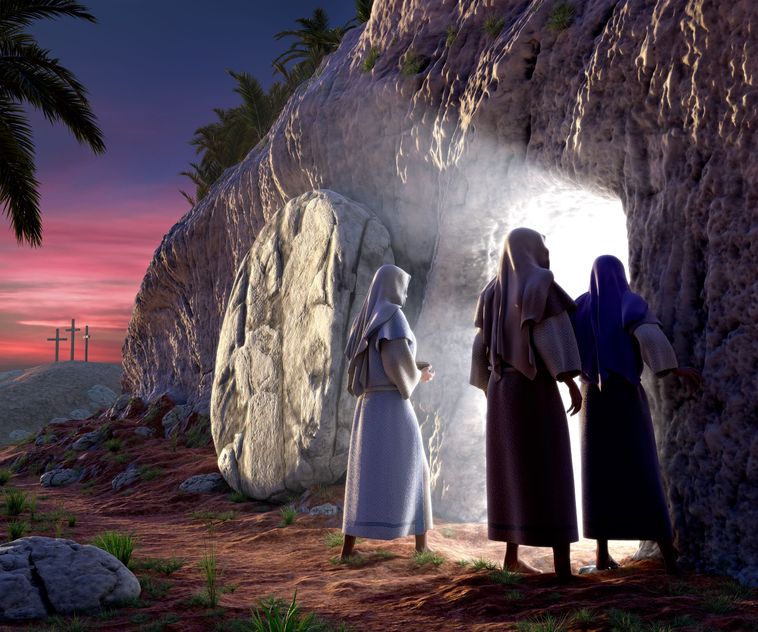
Here is my sermon for Easter Day.
Perhaps it’s just my imagination. Eastenders (for readers from abroad – Eastenders is a highly popular TV soap from the BBC noted for its miserable storylines and characters) always used to seem to be so miserable and depressing. But recently I’ve noticed that nobody in Eastenders seems to have to face the problems that the rest of us are dealing with. In fact they seem to be rather oblivious to the regular stream of bad news that we normal people have to cope with.
I can’t remember anyone moaning about the cold weather – or the cost of petrol – or rising fuel bills. Continue reading
My sermon for Maundy Thursday

Here’s what I said at our Maundy Thursday mass, just before the washing of feet.
They’re very popular on TV. Murder mysteries, whodunnits – Poirot, Miss Marple, Midsommer Murders, and more recently the excellent Father Brown. And all the clues are there so that you can work out along with the detective who actually committed the murder. The thing is, unless you’re very good at spotting the clues, you usually end up as baffled as the not very bright policeman and have to have it all explained by the famous detective at the end.
Our reading tonight is rather like that. For most of its existence centuries the church has been remembering the events of the Last Supper on Maundy Thursday, and every year we hear this reading from John’s Gospel. When you’ve read it, you have all the information you need to know precisely how Jesus wants you live and behave as Christians. Not so much a ‘whodunnit’ but a ‘how-you-do-it’ with clues to guide you to the right answer.
What I said on Sunday – Transfiguration Sunday
Last Sunday was the Sunday Next before Lent, also known as Transfiguration Sunday as the gospel reading is the transfiguration of Jesus. Here’s what I said – apologies for it being a little late this week!

You know what it’s like! Some friends invite you round for a meal. And what do they do? They get out the photo album. Or if they’re technologically savvy they show you the photos on the TV screen. First it’s the holiday photos. And then it’s the photos of the children. And you struggle to pretend that you’re really interested – your eyes start to glaze over and you keep saying, “Yes, that’s really nice …” without meaning it. Well – this morning we’re going to have a look at a photo album. Continue reading
What I said this Sunday – Pentecost
Here’s my sermon for Pentecost Sunday.

Many churches these days, like our own, use – instead of ordinary candles – oil-filled ones. The advantages are that they are cheaper, cleaner, and never appear to burn down. However long they burn for, they always look just like new. There is a downside though. You buy your oil-filled candle, put it in the candlestick, fill it with oil and light it. It looks wonderful. It burns away and never drips or gets any shorter. The problem is, though, that unless you regularly top it up with more oil, although it always looks alright it is getting emptier and emptier. And in the end it will just go out.
Christians are like oil-filled candles. They look fine on the outside. But they need regularly filling up on the inside – and you can’t tell from just looking at the outside when they’re getting empty. Like an oil-filled candle, a Christian needs a regular filling of the Holy Spirit. Otherwise, although outwardly we may look fine, we just get emptier and emptier – and in the end we stop burning. And simply not notice that we’ve gone out!
Pentecost Sunday – the day the Spirit came, and thousands heard Peter speaking in their own tongues of what God had done. The day that Jesus did as he had promised, and sent the Holy Spirit from the Father to fill up the disciples. But why did the disciples have to wait after the Ascension for Jesus to send the Spirit? And why don’t we, today, seem to experience the Holy Spirit in the way that the disciples did then?
Who is the Holy Spirit? I expect many people in the Church would be hard pressed to answer that question with any clarity if it were put to them. We are clear about God the Father. We know who Jesus is. But not many know who the Holy Spirit is. We talk about one God – Father, Son and Holy Spirit – but there is a tendency to have rather vague ideas about him. The New Testament tells us that the Holy Spirit is the person of the Godhead who dwells in us day by day. He gives gifts to his Church. There are several lists in the New Testament of gifts given by the Holy Spirit. They include such gifts as prophecy, miraculous powers, speaking in tongues as well as more down to earth gifts such as teaching, administration (yes, administration!) and helping others.
This is a Spirit who is at work in the Church – not just then, but now as well. A Spirit who comes to stir up the people of God – the apostles discovered that on the day of Pentecost when the Spirit came not like a gentle breeze, but a violent – think about that word – a violent wind. But if this is what the Holy Spirit is like, what does it mean for us as a group of Christians?
Canon John Gunstone describes in his book LIVE BY THE SPIRIT what preaching at Pentecost used to be like for him before he discovered the reality of the Holy Spirit: Trying to preach on Whit Sunday each year was an embarrassment. I just couldn’t think of anything to say. I rationalised the events narrated in Acts 2 as a dramatic mystical experience that was unique in the life of the apostolic Church, and I warned confirmation candidates not to expect anything like it today… If anyone had asked me (which they never did) how to receive more of the Holy Spirit into their lives, I would probably have mumbled something about saying prayers and receiving Communion.
Peter and the others experienced something dramatic – and Peter, as he preached to the crowds in response to those accusations of drunkenness, told them that God has poured out his Spirit as foretold by the prophetJoel.
That experience gave Peter a vision for the Church, a vision inspired by the Holy Spirit. What is our vision for the Church today? Do we have a vision at all? His vision of the new Church, the new community formed in the power of the Holy Spirit as a direct response to the death and resurrection ofJesusis, perhaps, different from our vision of what the Church should be. We have a tendency to limit our vision – if we have a small vision its easier to believe that it might come about. We lack faith in the power of God.
A report of the General Synod of the Church of England published in 1981 had the following to say about the difference between the Early Church and the Church of today and the way in which we attempt to devalue the message of Acts that the Church should be alive in the power of the Spirit: No amount of sterilisation of the Biblical message, and no amount of critical scholarship, have ever managed wholly to conceal the flow of the Acts narrative, and its message of a Spirit filled community facing persecution, working miracles, rejoicing in the power of God, and generally living a corporate “Pentecostal” life.
No matter how hard we might try, we cannot explain away the fact that the Early Church had something that we haven’t got. It had a freedom, a joyfulness, a carefreeness, a dimension of living in the Spirit, a willing self-surrender, an overflowing love, that does not seem to be evident in our Church today. The difference is highlighted by the fact that following Peter’s sermon more than three thousand people became Christians, yet today Churches inWestern Europe are shrinking. We are so accustomed to small churches that we accept them as normal. Church going in Western Europe is the lowest in the Christian world. Everywhere but in the West the Church is growing – in some places at a phenomenal rate. We need to discard the idea that the behaviour of the apostles at Pentecost and the gifts that they used in their ministry were unique to the Early Church. We need to allow the Holy Spirit of God to guide us and strengthen us and give us the gifts we need so that God’s kingdom might be glorified.
So let us allow the Holy Spirit to direct our lives as individuals and as a community. Because if we allow the Spirit to take control then the Church, in the words of Canon John Gunstone, will: be pulsating with the life of God, subject to his Word, anointed with his Spirit, constrained by his love, preaching his Good News, and ministering with his power.
Let each one of us, on this day of Pentecost, rededicate ourselves to God, Father, Son and Holy Spirit; pray that he will fill us anew with his Holy Spirit as he did the apostles, and that we may be open to the work that he wants to do among us, so that this Church may pulsate with the life of God. And then perhaps we can begin to live out our mission statement which appears at the top of your service sheet every week:
St John’s Church is called by God to be his people through faith in Jesus Christ, in the power of the Holy Spirit: worshipping him, growing in holiness, making disciples and serving others.
What I said on Sunday – Transfiguration Sunday
Last Sunday was what we call in the Church of England the Sunday next before Lent. It is also known as Transfiguration Sunday, hence the theme of my sermon. We had a baptism during the service which I mentioned in the sermon – I’ve removed the name of the baby being baptised.

Mark 9.2-9
I don’t know about you, but personally I’ve not climbed many mountains in my life. Well, strictly speaking I don’t suppose I can claim to have climbed any, since I always take the easy route – train or chairlift.
I remember in particular the time when we took the train to the top of Mount Snowdon in Wales during a holiday, and although Jesus and his companions walked to the top of their mountain, we had a similar experience at the top – we were overshadowed by cloud. It was a gloriously sunny day. No clouds in sight. An ideal day for going up a mountain – the views, we assumed, would be spectacular. The train set off on its journey to the summit – and it was about a hundred feet up that we entered the cloud. And this was no ordinary cloud. All the way up it rained, it was freezing, and the wind was so bad that it was impossible to keep the cold and the wet out of the carriages. At the summit station the children flatly refused to climb the short path to the actual summit of the mountain. They kept warm in the station whileAnne-Marieand I braved the elements and climbed the last few feet – I’m not quite sure why, since the only view we got was about six feet in front of us, since it was so dark and the rain was pouring down. Continue reading
 View from the Valley