How will the baby grow up?


7914342_m

This is the sermon I preached at Midnight Mass. For those from abroad who may be puzzled at the references let me explain. Eastenders is one of the top television soap operas in the UK and the Mitchell family are one of its most famous – or notorious – families.

John 1.1-14

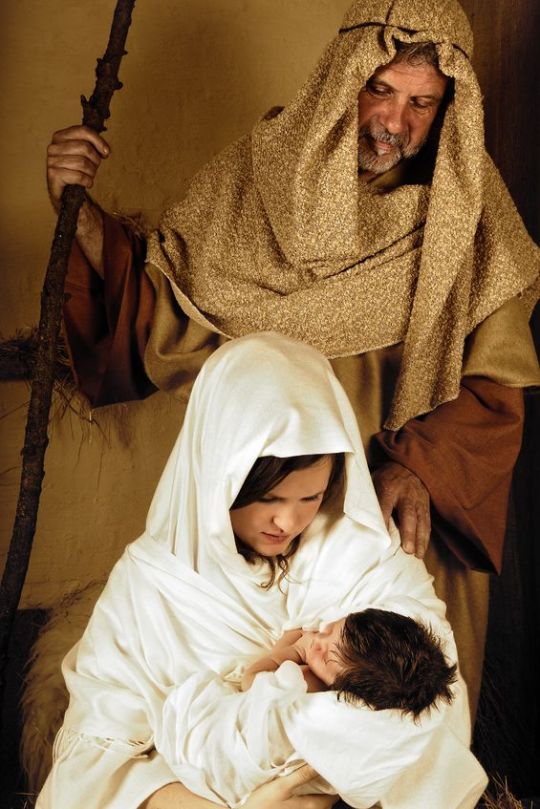
A baby is born. New parents with a tiny child. And at one level Mary and Joseph were no different from any other parents holding a new born baby in their arms. They must have had the same hopes, the same fears, the same questions. A scene repeated millions of times over thousands of years. And like so many parents, as they looked upon their baby, they must have wondered at some level – what kind of person will this baby grow up to be.

Every parent has been there. As you look upon your new child and wonder what the future holds for them, what can you expect? What will they be like as they grow up? What kind of person will they grow into? What will they achieve in life?

Well – I’ve done a survey of a typical area of London and looked at how children turn out when they grow up. The typical area of London I’ve chosen for this survey is Albert Square in Walford, to be exact. For those of you who don’t know where Albert Square is, it’s where the people from Eastenders live. Continue reading
You can’t always get what you want


7623328_m

The holy family

The gospel reading for the fourth Sunday of Advent tells us of Joseph’s dream about Mary’s expected baby. Joseph – and Mary for that matter – must have been a little perturbed about this somewhat surprise gift from God of a baby. Here’s what I said in my sermon.

Matthew 1.18-end

You can’t always get what you want sang the Rolling Stones. I sometimes think they might have been singing about Christmas presents. They also sound a bit like my mother when I was growing up, and I wonder how many parents will be saying that to their children this Christmas. The problem with Christmas presents though isn’t just that you can’t always get what you want but that too often you do get what you don’t want!

Christmas will soon be over. And we’ll be counting the cost of all those unwanted Christmas gifts. Continue reading

A king and a cross


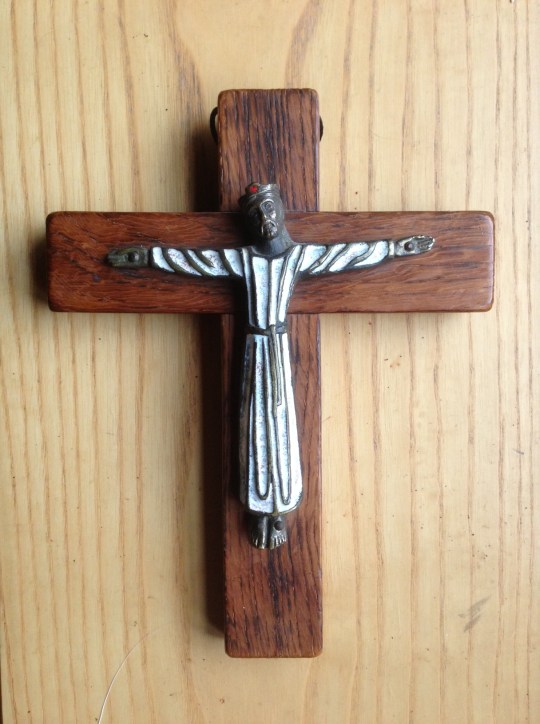
ChristusThis Sunday was the feast of Christ the King. Here’s what I said.

Jeremiah 23.1-6; Luke 23.33-43

I know that we have people here who enjoy quizzes – whether on the TV or radio or the quizzes we have from time to time at one of our social events here at St. John’s. I’m a great listener to radio quizzes, mainly because there is usually one on Radio 4 at 11pm on a Saturday night, so I can listen to one before retiring for the necessary beauty sleep I need to get up ready to take the 8 o’clock communion service. At the moment we are getting the Round Britain Quiz where the questions consist of three or four apparently unconnected facts and the teams have to find what links them.

Well, here’s a question for you this morning. I used this with the children at school this week, though they got the benefit of pictures to go with the question. What is the link between these.

  • A potato
  • A gorilla
  • Elvis Presley
  • A pub in Caterham-On-The-Hill
  • Camelot
  • Henry VIII

Continue reading

Remembrance Sunday


565180_mYesterday was Remembrance Sunday in the United Kingdom. At St John’s we have a special Service of Remembrance culminating in the two minutes’ silence at the war memorial. Here’s what I said.

As any general will tell you, the last thing you want is a soldier who won’t obey orders. When you’re engaged in warfare, discipline is vital. Which is why the Christmas Truce of 1914 caused the generals of both sides such a headache. During the week leading up to Christmas, groups of German soldiers on the one hand and mainly British soldiers on the other began to sing Christmas carols across the trenches. In places the trenches were only yards apart. As Christmas Day approached, soldiers of both sides started to climb out of their trenches, walking across no-man’s land. They talked with each other and exchanged gifts. Joint burial ceremonies took place, and meetings often ended with carol-singing. And on Christmas Day, most famously perhaps, games of football took place between the opposing sides – those who days earlier had been engaged in the most awful conflict.

Perhaps it was the football that was taking things too far. Continue reading

Better poor than rich


10834009_m-1

Yesterday was All Saints Sunday, the Sunday nearest to the feast of All Saints on 1st November. The gospel reading is Luke’s version of the Beatitudes. Officially the gospel reading is Luke 6.20-31. However, I have included in the link verses 12 to 19, the reason why will be clear as you read what I said.

Luke 6.12-31

First lines – whether in a novel, or a film, or even a piece of music – are so important. They can grab our attention – or put us totally off. A classic first line in a novel will immediately draw the reader in. It may give a very clear hint as what the rest of the book will bring, or be so enigmatic or intriguing that you just have to read on to find out more. The same is true of first lines in cinema, and while heard rather than read, a classic first line will make you immediately look forward to seeing how the film unfolds. Take this one, which I think is one of the best ever:

I never knew the old Vienna before the war, with its Strauss music, its glamour and easy charm – Constantinople suited me better. Anyone know that one?  Continue reading

Take it off the shelf and read it!


19289391_m

Last Sunday was the last Sunday after Trinity. In the Church of England we have the option of keeping it as Bible Sunday. At St. John’s we always do so, because of the importance of encouraging people to read and live by God’s Word to us. This year Mother Anne-Marie was preaching. Here’s what she said.

Isaiah 45.22-end; Romans 15.1-6; Luke 4:16-24

On Bible Sunday we celebrate the most popular – but the most unread – book in the world. Under-read in Britain and Western Europe at any rate! But this is the book on which civilisations have been founded, for which people have given their lives in the fires of the Reformation period, and for which people still risk everything so they can smuggle it into repressive countries. And yet for many of us, though we own one of these precious books, it sits on our shelves, undisturbed. Continue reading

Thinking about Mission – 1


58808298 - good news information announcement thinking concept

58808298 – good news information announcement thinking concept

This week we had the first of three sermons to help us think about Mission. The mass was then followed by a 30 minute discussion over coffee for people to contribute their own answers to the question posed in the sermon. Inevitably some of the sermon will only make sense to members of St John’s so I apologize for that and hope that those who read this who aren’t church members will find the rest helpful.

1 Timothy 2.1-7; John 13.1-17

You’ve just received an email. You haven’t opened it yet, but the subject line says in capital letters with an exclamation mark at the end: GOOD NEWS!

What could it be? What could this good news be? What would be good news for you? What would you most like to read when you open it? Well, let’s assume that it isn’t the good news that someone in Nigeria has decided to send you five million pounds if only you will send them five thousand pounds first! It really is good news – but what would you like that good news to be? Continue reading

Where would we be without rules?


52901684_m

This week’s gospel reading was about Jesus healing on the sabbath. The leader of the synagogue got a bit upset!

Luke 13.10-17

Where would we be without rules? Rules are important aren’t they? Without rules we’d all descend into chaos. It was the rules that caused such a problem for Jason Kenny as he rode to his sixth gold medal in the men’s keirin cycle final in the Olympics this week. For those of you who weren’t watching let me explain. The keirin is a race where the riders all do several laps of the track behind a kind of electric moped that gets faster and faster. Then, when the moped leaves the track the riders all race for the finish.

The problem was that in the first run of the race a judge decided that at the last moment one of the riders had overtaken the moped by a matter of a couple of centimetres before it left the track – against the rules. So the race was stopped, and judges poured over a replay of the race to decide who had broken the rules – possibly Jason Kenny. The commentators couldn’t tell whether he or anyone else had. While we waited the commentators repeated several times in different ways: this has never happened before, this is without precedent, the problem is the rules are not entirely clear, they’re subject to interpretation. Continue reading

Why choose Mary?


7914342_m

This Sunday we kept the feast of the Blessed Virgin Mary. It actually falls on the 15th and in common with many churches we celebrated it on the 14th. Here’s what I said:

Luke 1.46-55

Given the increasing shortage of priests you’d think that the Church of England would be falling over itself to welcome anyone who was foolhardy enough to offer themselves for training for the priestly ministry. But I’m sure it comes as no surprise to you that that is not the case. I’ve known quite a few people over the years who have expressed interest. Some got put off by the pay and conditions of service. Some realized that it just wasn’t for them. Others made it as far as the selection process. Only a handful were actually chosen to go and train to be priests.

The problem is it’s not easy knowing whether someone is called to be a priest in the Church. For the Church is not like other careers. It doesn’t matter how highly qualified you are or how able you might be – the Church has to decide whether God actually wants you to be a priest regardless of what your other qualifications might be. Important, of course, for the church to be able to discern the kind of people that God is calling. So the Church provides a very helpful 24-page document entitled Criteria for Selection for the Ordained Ministry in the Church of England.

And the introduction to the guide covers such aspects of the selection procedures as:

  • The vocation criterion
  • Gathering evidence
  • Assessing potential and risk
  • Developmental and non-developmental issues

Riveting reading. And the guide goes on to cover various aspects of a person’s makeup: spirituality, relationships, personality and character, leadership and collaboration, faith and so on – and I particularly like this one – quality of mind.

All important stuff, of course. I wonder whether God’s ever read it? Continue reading

The means to live or a meaningful life?


675836_m

Colossians 3.1-11; Luke 12.13-21

Well – there’s been no shortage of news over the past few weeks, has there? Much of it has been about the EU Referendum, of course – both the run-up and the aftermath! And inevitably much of the Referendum coverage focused on the economic consequences of staying in or coming out. Since we all voted we’ve seen the pound fall against the dollar and the euro. People are worried about the effect on their pensions, or on the value of their houses. And nobody really knows what the economic future holds. Will there be a recession?

Of course, it’s only natural that we are concerned about our financial security and about what the future might hold for us – whether as individuals or as a country. There’s only so much economic news and economic forecast one can take. But with the news that the Bank of England is set this week to lower interest rates to their lowest ever since the Bank was founded, there’s more to come. Continue reading