
Category: Sermons
Don’t worry!

Genesis 1.1-2.3; Matthew 6.25-end
What do you worry about? What keeps you awake at night?
Well, we worry about all kinds of things, but I wouldn’t mind betting that one thing most of you worry about at some time or other is money.
Mintel is a market research company. And a while ago they carried out a survey about worrying. And according to their survey 8 out of 10 people worry. I couldn’t help wondering if the other 2 people worried that they didn’t worry.
And what are the things we worry about? The survey showed that top of the list – and no surprise – is money! Then comes, in order, problems with family and friends, health, stress at work and then in fifth place, job security.
Today’s gospel reading gives us Jesus talking about worry! And the Church of England has done a very interesting thing with our reading this morning. Jesus starts by telling the crowd that they are not to worry. Easier said than done, of course! But look at those opening words of Jesus: Continue reading
How do we know what is right?

Ecclesiasticus 15.15-end; Matthew 5.21-37
One of the most popular and famous television programmes of the last 20 years was Who wants to be a Millionaire. Each contestant had to answer just 12 questions correctly to win a million pounds. During its run – which I managed to avoid completely – it made five people into millionaires.
At its height over 19 million people watched it. And one of the factors that made it famous was its use of what were called ‘lifelines’ which contestants could use if they were stuck on a particular question. I’m sure you remember the format – each question had four possible answers and if you got stuck you could use a lifeline. You had a choice of three.
One of these was Phone a friend, a phrase which has now entered the language. The second was 50/50 where the computer would remove two answers leaving you with one right and one wrong answer. The third lifeline was … ? Continue reading
Light for the world
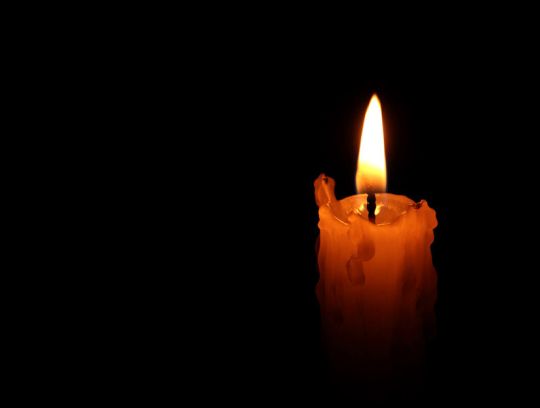
This Sunday we kept the feast of the Presentation of Christ in the Temple. It’s actually on 2nd February, but the Church of England allows us to transfer it to the previous Sunday when more people will be in church! During the service we had a baptism, and at the end we joined in the candlit procession which ends at the font for the final part of the liturgy. The font is by the main church door, and so we remember that the place where we give our lives to Christ in baptism is right next to the door where we leave worship to take Jesus out into our world.
Here’s what I said.
The birth of a child has always been a cause for celebration. And throughout history different cultures and religions have had their own special ways of celebrating. In our own culture people celebrate with parties, champagne, and often – as this morning – a christening at the local church. Continue reading
Happy families?

Jesus calls his first disciples. But what about their families? This week’s gospel reading invites us to reflect on the reality of being called by Jesus to follow him.
Do you remember the good old days? When instead of everyone doing their own thing in an evening families used to gather together and either watch TV or play games? And simple games. Nothing like the complexity of today’s video games. And one of the games that used to be popular, and that we played when I was little, was the card game Happy Families.
A Happy Families pack of cards consisted of a number of sets of four. And in each set there would be a father, identified by his occupation and a surname that fitted. Names like – and these are all genuine names from Happy Family sets according to the article on Wikipedia.
- Mr Pipe the Plumber
- Mr Flatfoot the Policeman
- Mr Bacon the Butcher
- Mr Ashes the Undertaker
- Mr Fisher the Fisherman
Then, in each set, there was a wife. She never had a job – she was always, for example, Mrs Fisher the Fisherman’s wife. Then there would be two children – Master Fisher the Fisherman’s son and Miss Fisher the Fisherman’s daughter. In those days a happy family apparently consisted of a man who worked, a wife who didn’t, and two children, one of each gender. Continue reading
What are you looking for?

“What are you looking for? The first words of Jesus in John’s gospel, from our reading last Sunday. He speaks them to Andrew and another disciple. He also speaks them to each of us.
People often worry about the lifestyle of many of today’s young people – and the culture adopted by so many of drinking, clubbing, casual relationships and so on. “Not like it was in our day – we were so much better behaved,” I hear you saying!
Of course, it’s actually nothing new at all. People made the same complaints about young people in the Roman Empire. Young people have always behaved in a way of which their elders disapproved. And one young man we know a lot about was Saint Augustine. Because Augustine, before he became a Christian and subsequently one of Christianity’s greatest thinkers and writers, had a bit of a reputation. And we know about his reputation because he later wrote about it. Continue reading
Follow your star home
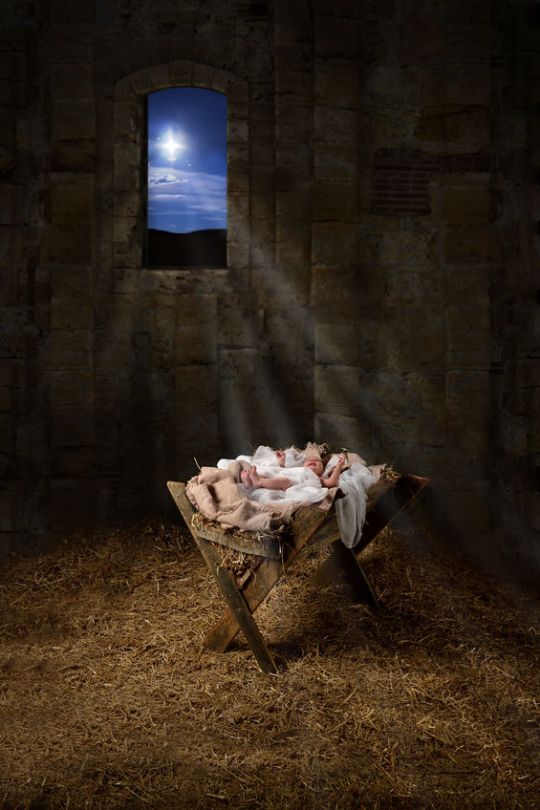
This Sunday we kept the feast of Epiphany, transferring it from the 6th, as we are allowed to do in the Church of England. This meant that the feast of the Baptism of Christ, which it displaced, was itself transferred to Monday and celebrated with a mass. One of the things we do every year at Epiphany is bless chalk which is then taken home and used to mark the doorways to our homes. There is a very good explanation of this old European tradition here.
How many of you have taken down your Christmas decorations? Most of you, I suspect! (At this point I got people to put their hands up – only one person other than my wife and I still had them up – an Orthodox Christian who was, of course, celebrating Christmas according to the Orthodox calendar).
Well, we still have them up in the vicarage! Let my explain why! If you follow tradition you’ll at least have kept them up for twelfth night which was on Thursday, and then have taken them down on Friday, the feast of Epiphany. However, we are allowed to keep the feast of Epiphany on the nearest Sunday, so this year you can keep them up an extra two days and take them down today. Apart from the crib scene, of course – our knitted crib figures will stay up in the vicarage until Candlemas.
There’s an old superstition that if you don’t take your decorations down the day after twelfth night it will bring bad luck – apparently, the gods of the greenery might escape and take up residence in your house. Continue reading
Get yourself fit in the New Year
 The 27th of December is the feast day of Saint John, the patron Saint of our church. Although we have a mass on the day itself everyone is usually recovering from Christmas, so it’s our custom to keep the feast on the first Sunday after Christmas. This year, of course, that meant New Year’s Day. I decided, rather than to talk about Saint John, to touch on the subject of resolutions for the coming year. Here’s what I said in my sermon.
Well, here we are – New Year’s Day and in Church when I’m sure we’d all really like to be in bed recovering from the late night last night. Don’t worry – I’ve no intention of keeping you long this morning. I just have a few thoughts, at the beginning of this New Year, about resolutions for the coming month.
After the indulgence of Christmas – all that food and wine – among the most popular New Year resolutions are new diets and new exercise regimes as people make the decision to get themselves back into shape. So – what diet to adopt? What sort of exercise to do?
Don’t worry – I have some ideas. Friday’s edition of The Times carried a really interesting article about a particular diet and exercise regime which I’ll share with you this morning. It’s not new. In fact, it dates back to before Queen Victoria came to the throne. 1834 to be exact, and it’s found in a book called British Manly Exercises – it’s just been discovered by researchers at Cambridge University. Though I’m sure that, despite its title, it’s equally applicable to women. Continue reading
How will the baby grow up?

This is the sermon I preached at Midnight Mass. For those from abroad who may be puzzled at the references let me explain. Eastenders is one of the top television soap operas in the UK and the Mitchell family are one of its most famous – or notorious – families.
A baby is born. New parents with a tiny child. And at one level Mary and Joseph were no different from any other parents holding a new born baby in their arms. They must have had the same hopes, the same fears, the same questions. A scene repeated millions of times over thousands of years. And like so many parents, as they looked upon their baby, they must have wondered at some level – what kind of person will this baby grow up to be.
Every parent has been there. As you look upon your new child and wonder what the future holds for them, what can you expect? What will they be like as they grow up? What kind of person will they grow into? What will they achieve in life?
Well – I’ve done a survey of a typical area of London and looked at how children turn out when they grow up. The typical area of London I’ve chosen for this survey is Albert Square in Walford, to be exact. For those of you who don’t know where Albert Square is, it’s where the people from Eastenders live. Continue reading
You can’t always get what you want
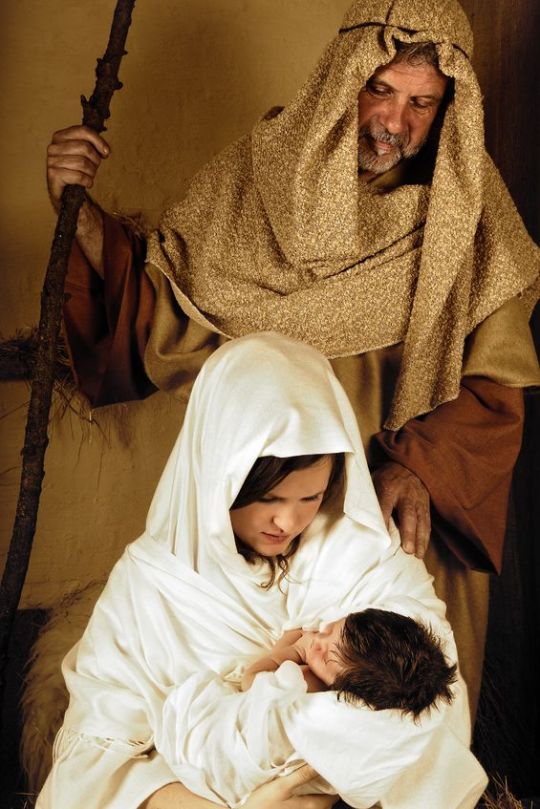
The holy family
The gospel reading for the fourth Sunday of Advent tells us of Joseph’s dream about Mary’s expected baby. Joseph – and Mary for that matter – must have been a little perturbed about this somewhat surprise gift from God of a baby. Here’s what I said in my sermon.
You can’t always get what you want sang the Rolling Stones. I sometimes think they might have been singing about Christmas presents. They also sound a bit like my mother when I was growing up, and I wonder how many parents will be saying that to their children this Christmas. The problem with Christmas presents though isn’t just that you can’t always get what you want but that too often you do get what you don’t want!
Christmas will soon be over. And we’ll be counting the cost of all those unwanted Christmas gifts. Continue reading
A king and a cross
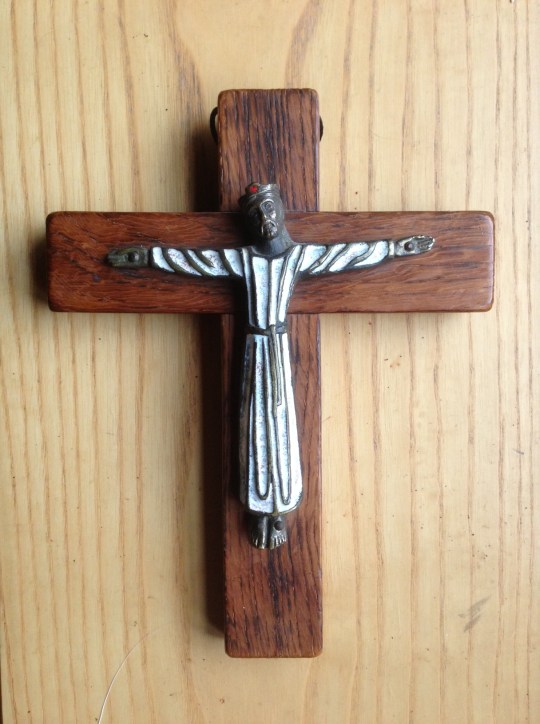 This Sunday was the feast of Christ the King. Here’s what I said.
Jeremiah 23.1-6; Luke 23.33-43
I know that we have people here who enjoy quizzes – whether on the TV or radio or the quizzes we have from time to time at one of our social events here at St. John’s. I’m a great listener to radio quizzes, mainly because there is usually one on Radio 4 at 11pm on a Saturday night, so I can listen to one before retiring for the necessary beauty sleep I need to get up ready to take the 8 o’clock communion service. At the moment we are getting the Round Britain Quiz where the questions consist of three or four apparently unconnected facts and the teams have to find what links them.
Well, here’s a question for you this morning. I used this with the children at school this week, though they got the benefit of pictures to go with the question. What is the link between these.
- A potato
- A gorilla
- Elvis Presley
- A pub in Caterham-On-The-Hill
- Camelot
- Henry VIII
 View from the Valley