
Category: Sermons
What I said for Christ the King

This Sunday was the feast of Christ the King, the last Sunday of the Church’s year. Here’s what I said.
Jeremiah 23.1-6; Colossians 1.11-20; Luke 23.33-43
I know that we have people here who enjoy quizzes – whether on the TV or radio or the quizzes we have from time to time at one of our social events here at St. John’s. I’m a great listener to radio quizzes, mainly because there is usually one on Radio 4 at 11pm on a Saturday night, so I can listen to one before retiring for the necessary beauty sleep I need to get up ready to take the 8 o’clock communion service. At the moment we are getting the Round Britain Quiz where the questions consist of three or four apparently unconnected facts and the teams have to find what links them.
Well, here’s a question for you this morning. I used this with the children at school last year, though they got the benefit of pictures to go with the question. What is the link between these.
- A potato
- A gorilla
- Elvis Presley
- Camelot
- Henry VIII
What I said for Remembrance Sunday

Here’s my sermon for Remembrance Sunday.
Peace is an emotive word. It’s a word that conjures up all kinds of feelings within us. It is something that we all seek in life. We look around our world and see so many places, so many people, that need peace. And yet it seems so elusive. Having now passed the twelfth anniversary of the beginning of the war in Afghanistan, it is, I am sure, something that we all pray and hope for. And yet the reality of our world is that peace is so elusive. Even when not involved in our own conflicts British forces have been involved so much in peace-keeping duties around the world and will continue to be called upon in that role.
Next year we reach the 100th anniversary of the outbreak of The Great War. This year we might think of as the 100th anniversary of the end of peace – the end of a world that had yet to be confronted with the reality of modern warfare. The end of a world in which no-one really could imagine the horrors that the world would face in two world wars and so many other conflicts. And over that 100 years so many have lost their lives – both those who have fought, and so many innocents. And we gather here again to remember those from our own nation who have given their lives, and to commit ourselves to continue to work for the peace for which they fought.
The great paradox of peace is that it is often only achieved as a result of conflict. And since the year 1900 there has only been one year when no-one from the British services died in action – 1968. And today we remember those who achieved the peace we enjoy at the cost of their own lives, those who have given everything for their country, and we pray for those who still mourn for relatives and friends who never returned. And we pray for those who still struggle to come to terms with their experience of war. For the casualties of war include not just those who die, but often those who survive but who have witnessed, or endured themselves, great suffering.
The poppy that we wear is a powerful symbol of our feelings on this day, associated as it is with the fields where so many died in the First World War, growing as such a simple and yet powerful symbol of life and self-sacrifice in a place where so much destruction had been wrought. It is a symbol with a double meaning – it reminds us of those who never returned from the conflicts in which our country has been involved. As such it looks to the past. But the poppy also looks to the future – it is a symbol of hope – for it reminds us that we must all continue to strive for that peace that so many gained for us with their lives. It reminds us that today is a day of both looking backwards and looking forwards. And yet it has been hard not to notice, as I have walked about Caterham this week, that so many people don’t wear a poppy.
I remember as a child almost everyone wearing one. You were unusual if you didn’t. Because most adults, when I was a young child, still remembered the Second World War vividly. They all knew people who had fought and suffered and died. And their parents and my grandparents were the generation who had lived and fought and died in the Great War. So they wore a poppy. Today, those of my age group and younger don’t have the same experience. And so for many remembrance doesn’t seem so important, and those who wear a poppy today stand out. So many people today – in spite of the accessibility of news through television and the newspapers – have no direct experience of war, either as a combatant or as a civilian or as a relative or friend of someone serving.
I said earlier that today is a day both of looking backwards and looking forwards. As you came to church this morning you will have heard our bells ringing. And our bells themselves are a symbol of both mourning and of hope. As always they are rung on this day half-muffled. That means that the bell clapper, the part that strikes the bell, is covered on one side so that it makes that softer, rather sombre sound, every second time the bells ring. So the bells alternate between a rather mournful sounding ring, so appropriate to today and so expressive of our feelings, with a brighter and more joyful sounding ring.
But there is one thing about our bells that you can’t see or hear. The bells originally hung in the church of St Mary at Lambeth, just by the entrance to Lambeth Palace, the London home of the Archbishop of Canterbury in central London by the river Thames. They were brought here in 1975 after St Mary at Lambeth was made redundant. The church is now a garden centre museum. Each bell, in the traditional manner, bears an inscription of some kind. The fifth bell is inscribed with this:
14.8.1914 – 11.11.1918.
Silent I hung in war, I sang the hour of peace.
O England, evermore pray thou that wars may cease.
And on Armistice Day, the day that war ended, the 11th November 1918, that bell that now hangs in our tower, that had hung silently for four years, rang out across London as it sang the hour of peace.
Today is a day of both of looking backwards and of looking forwards. And it is in Jesus Christ that we can find a sense of hope for the future as we remember today those who died as a result of war and conflict. And we find it in the cross upon which he died. The cross reminds us that Christ himself undertook the supreme sacrifice. There is no greater love than to lay down one’s life for one’s friends said Jesus, before he did just that for each and every one of us. Laying down his life for us on the cross, only to rise again on the third day to show us the way to eternal life.
Today we remember all who have died as a result of war – and give thanks too for all those who risked their lives but came home. And as we remember today those who have made that sacrifice of life itself – of giving their lives in the service of their countries and of their families and communities – we can give thanks for them, know the assurance that Christ gives us that they are at rest with him for eternity, and dedicate our lives to the service of the communities for which they died. We must always remember – for it is only when you look back and remember and reflect on the past, that you can look forward and know what you need to work towards in the future. And remembrance really means something when it looks not only back to the past, but spurs us on into the future to continue to work for the peace for which those we remember today died.
Which brings me back to the poppy. There is a famous poem called In Flanders Field by Major, later Lieutenant Colonel John McCrae of the Canadian Army, a surgeon attached to the 1st Field Artillery Brigade. It begins:
In Flanders Field the poppies blow
between the crosses, row on row
that mark our place…
It gave rise to the association of poppies with those who had died and to the custom of wearing poppies for Remembrance. He wrote it in the spring of 1915 after the terrible battle at Ypres. He had just buried a friend, Lieutenant Alex Helmer, who had been killed by a shell. He had carried out the burial service himself since there was no chaplain available. Poppies were growing in the ditches around the cemetery and were blowing in the gentle east wind as McCrae wrote the poem. In fact, McCrae actually threw the poem away, but luckily it was rescued by a fellow officer and sent to Punch magazine which published it the same year. McCrae himself died in 1918.
The poem finishes with a call not to break faith with those who have died.
To you, from failing hands, we throw
the torch; be yours to hold it high.
If ye break faith with us who die
we shall not sleep, though poppies grow
in Flanders Field.
We keep faith with those who died by continuing to commit ourselves to working for peace and justice and reconciliation in our world and in our nation and in our community – those ideals for which so many have fought and died. And for which God gave his Son to die upon a cross.
What I said for All Saints Sunday

A busy start to the week so I’m a little late with posting last Sunday’s sermon, but here it is now! We kept All Saints Day. The gospel reading for Year C is Saint Luke’s version of the Beatitudes, from the Sermon on the Plain. Here’s what I said.
First lines – whether in a novel, or a film, or even a piece of music – are so important. They can grab our attention – or put us totally off. A classic first line in a novel will immediately draw the reader in. It may give a very clear hint as what the rest of the book will bring, or be so enigmatic or intriguing that you just have to read on to find out more. The same is true of first lines in cinema, and while heard rather than read, a classic first line will make you immediately look forward to seeing how the film unfolds. Take this one, which I think is one of the best ever:
I never knew the old Vienna before the war, with its Strauss music, its glamour and easy charm – Constantinople suited me better. Anyone know? Yes -that’s from The Third Man with Orson Wells. Continue reading
What I said last Sunday – Bible Sunday

Last Sunday was the last Sunday after Trinity. However, as an option we are allowed to keep it as Bible Sunday. I was a little naughty and changed the gospel reading from that set to Luke 5.1-11 for reasons which are apparent in the sermon.
Kitchen cupboards. Useful things, aren’t they.
When our new vicarage was built the diocese put some very nice cupboards into the new kitchen. And in the corners we’ve got those cupboards that go around the corner and have those really nifty doors that fold so that they open and close easily. When I was growing up we didn’t have any food cupboards in the kitchen at all. We didn’t have a fridge, either, until I was a teenager. We had a pantry instead. But with the invention of kitchen cupboards and fridges, pantries and larders no longer have a place in the typical home of today.
Kitchen cupboards are just perfect for storing away all kinds of tins and packets until you need them. Now, the great thing about the pantry that we had when I was young was that everything was on open shelves, and you could see it all. There’s an inherent problem with kitchen cupboards. You might, of course, be highly organised and know exactly what you’ve got in yours. But if you’re like most people then unless you only line up tins and packets along the very front of the cupboard shelves then stuff starts to get lost or forgotten at the back. Fridges are just the same. And sometimes stuff can sit at the back of the kitchen cupboard for years. And corner cupboards are the worst of all, because trying to reach to the back corner – especially on the top shelf – is downright physically impossible. Continue reading
What I said last Sunday – Civic Service
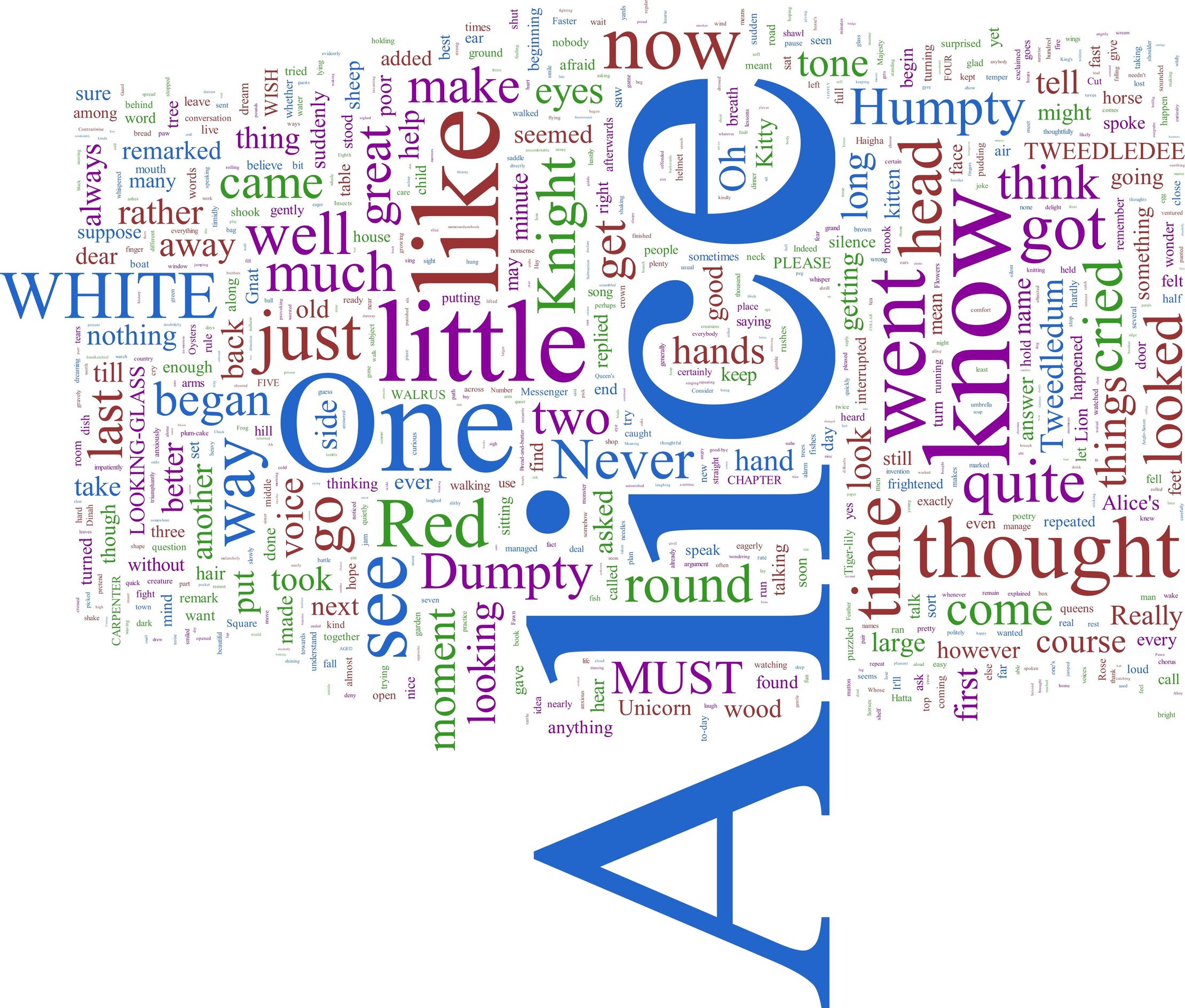
Last Sunday St John’s hosted the civic service. This is an annual service which moves about from church to church when the Chairman of our District Council comes to church along with other council members and local dignitaries. They make a public promise to serve the local community to the best of their ability and with God’s help. Councillor Beverley Connolly, Chairman of Tandridge District Council, chose the following readings for the service:
1 John 3.14-18, James 2.1-4, Luke 16.19-31
I decided to preach mainly on the first of the three readings. Here’s what I said for the occasion, and I began with a short passage from Lews Carroll’s Through the Looking Glass.
“There are three hundred and sixty-four days when you might get un-birthday presents,” said Humpty Dumpty, “and only one for birthday presents, you know. There’s glory for you!”
“I don’t know what you mean by ‘glory,’“ Alice said.
Humpty Dumpty smiled contemptuously. “Of course you don’t – till I tell you. I meant ‘there’s a nice knock-down argument for you!’”
“But ‘glory’ doesn’t mean ‘a nice knock-down argument,’” Alice said.
“When I use a word,” Humpty Dumpty said, in a rather scornful tone, “it means just what I choose it to mean – neither more nor less.”
“The question is,” said Alice, “whether you can make words mean so many different things.”
Anyone involved in politics will know the importance of clarity, the need to choose words carefully so that your meaning is conveyed clearly. It’s no good being like Humpty Dumpty and being clear what you yourself mean, if you then have to go on and explain to those on the receiving end what you actually meant. We all know how easily newspapers can report, for example, something a government minister has said – only for a few days later for a spokesman to say, “That’s not actually what they said, what they really meant was … !“ Continue reading
What I said last Sunday – Trinity 20 (Proper 23)

Here’s my offering for last Sunday. The gospel reading is the story of the ten lepers who are healed by Jesus, but only one of them says thank you.
Why do people find it so difficult, these days, to say ‘thank you’?
Take Christmas and birthdays, for example. When I was growing up it was taken for granted that you taught your children that saying ‘thank you’ was essential – even when you had to say it for things that you didn’t actually want. It was the polite thing to do, and it was expected. It was, as my parents used to say, the ‘done thing’. What was not the ‘done thing’ was to tell your parents exactly what you wanted for Christmas or birthday presents. These days everyone makes sure beforehand that you know exactly what presents they want, which to my mind rather takes the fun out of giving. When I was young you simply had to wait to find out what you were getting – which of course just increased the temptation to go looking beforehand while your parents weren’t around to see what they had bought. My father used to hide the Christmas presents in the loft, which was inaccessible without a step-ladder, so there was no way a small child could investigate – rather sneaky on his part, I thought. Continue reading
What I said last Sunday – Saint Michael
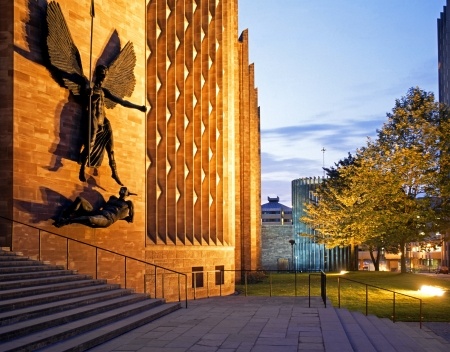
Saint Michael overcoming Satan – sculpture by Jacob Epstein at Coventry Cathedral
In the Church of England we were keeping the feast of Saint Michael and All Angels. I decided to tell everyone who Saint Michael and the other six archangels are and what their roles are.
Those of you who are into quizzes and quiz nights will know that every quiz – and especially pub quizzes – has to have a tie-breaker. And one particularly popular tie-breaker – at least I assume it is as I’ve come across it more than once, even though I don’t frequent pub quizzes – is one we had recently at one of our church functions. It was at our silent auction, and the tie-breaker for the quiz was ‘Name the actors who were the Magnificent Seven in the film of that name.’ The reason for it being a good tie-breaker is that most film buffs can get five or six names, but then most get stuck on the last one who has often been known as ‘that other one whose name nobody can ever remember!’ Continue reading
What I said last Sunday – Saint Matthew
Last Sunday we kept the feast of Saint Matthew the Apostle, which was actually the day before on 21st September.
“For I have come to call not the righteous but sinners.” (Matthew 9:13)
The Crystal Palace was built in Hyde Park to house the Great Exhibition in 1851. After the Exhibition was over it was dismantled and rebuilt in an enlarged form on what was then known as Penge Common in Sydenham Hill – now known, of course, as Crystal Palace Park. Sydenham Hill was at that time an affluent London suburb full of large houses. And the rebuilding of the Crystal Palace presented the residents with something of a problem.
What on earth were they going to do with all the workers who would be coming to live locally to do the rebuilding. For one thing was quite clear. They couldn’t possibly attend the same church as the local residents, Saint Bartholomew’s in Sydenham. Continue reading
What I said a week last Sunday – Holy Cross Day
Following three weeks away on annual leave, I’m finally catching up with everything that piled up during my time away. Apoologies for this being somewhat late, but here is my sermon for a week last Sunday. We kept the feast of the Exaltation of the Holy Cross, which is actually the 14th September. We held it a day late.
“I’ll give you something to believe”, said the White Queen to Alice, “I’m just one hundred and one, five months and a day.”
“I can’t believe that!! Said Alice.
“Can’t you?” the Queen said in a pitying tone. “Try again: draw a long breath, and shut your eyes.”
Alice laughed. “There’s no use trying,” she said: “one can’t believe impossible things.”
“I dare say you haven’t had much practise,” said the Queen. “When I was your age, I always did it for half an hour a day. Why, sometimes I’ve believed as many as six impossible things before breakfast.” Continue reading
What I said on Sunday – The Blessed Virgin Mary
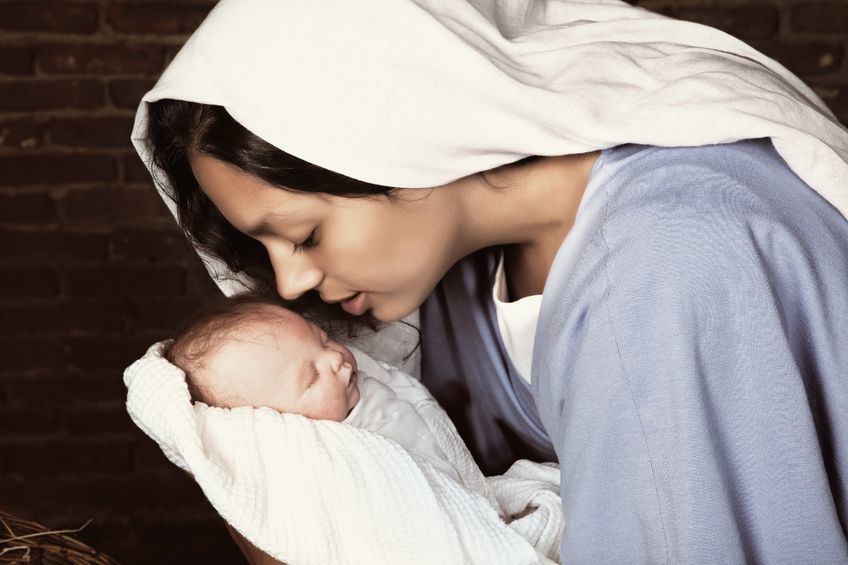
Last Thursday was the feast of the Blessed Virgin Mary – also known as the Assumption in the Roman Catholic Church and The Dormition in the Orthodox Church. We transferred the feast to the following Sunday. Here’s what I said.
Revelation 11.19-12.6, 10; Luke 1.46-55
It’s not easy knowing whether someone is called to be a priest in the Church. For the Church is not like other careers. It doesn’t matter how highly qualified you are or how able you might be – the Church has to decide whether God actually wants you to be a priest regardless of what your other qualifications might be. Important, of course, for the church to be able to discern the kind of people that God is calling. So the Church provides a very helpful 24-page document entitled Criteria for Selection for the Ordained Ministry in the Church of England. And the introduction to the guide covers such aspects of the selection procedures as:
- The vocation criterion
- Gathering evidence
- Assessing potential and risk
- Developmental and non-developmental issues
and the guide goes on to cover various aspects of a person’s makeup: spirituality, relationships, personality and character, leadership and collaboration, faith and so on – and I particularly like this one – quality of mind. All important stuff, of course. I wonder whether God’s ever read it? Continue reading
 View from the Valley